PUBLICATION: Policy brief
Serbia’s Political Crisis: What Materialised, What Didn’t, and What Comes Next
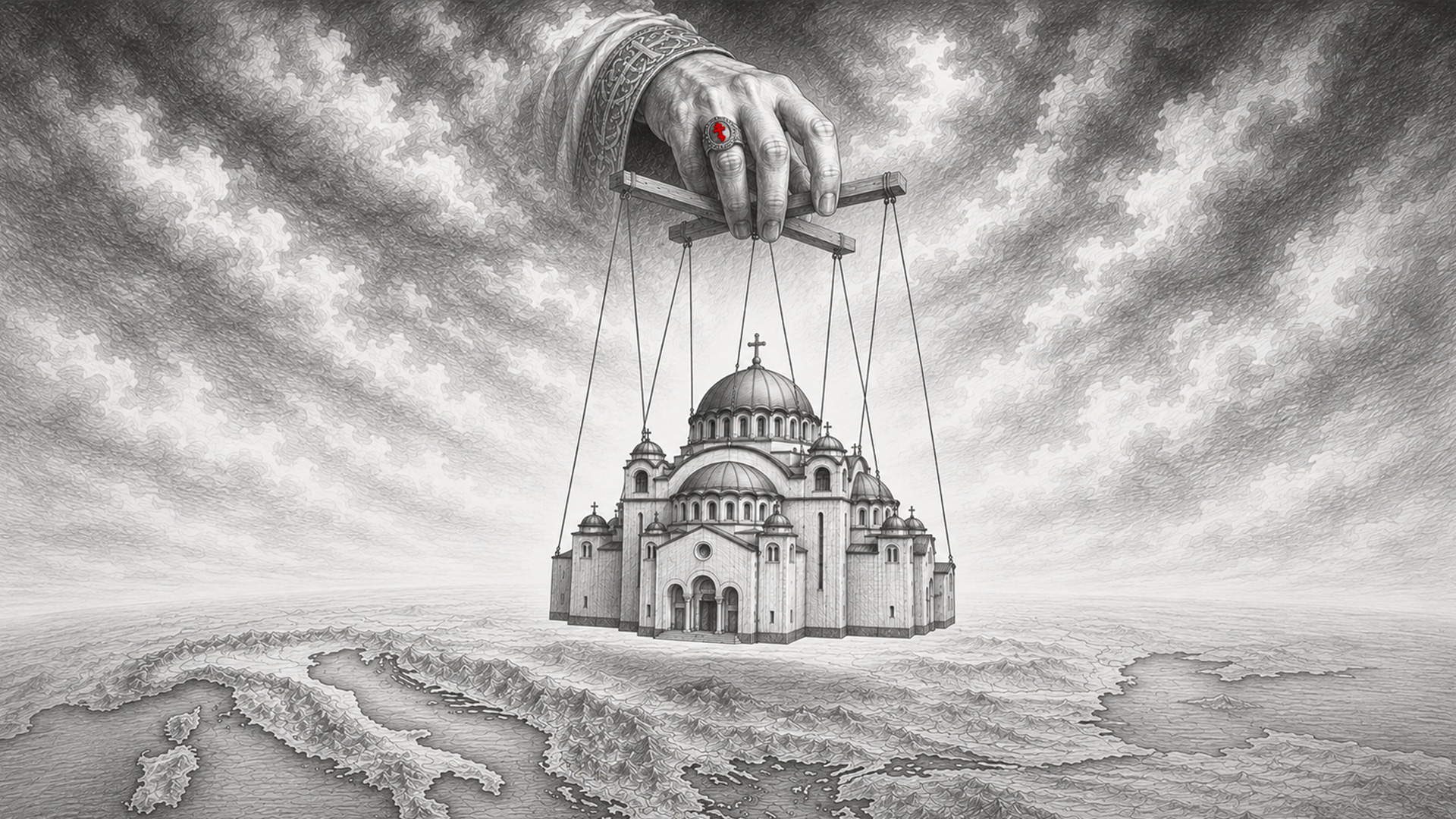
In November 2025, the Belgrade Centre for Security Policy published the policy brief Political and Institutional Crisis in Serbia: Possible Scenarios. The brief outlined four scenarios and their corresponding outcomes.
These ranged from (1) a prolonged impasse marked by controlled repression and declining protests; (2) an EU-mediated negotiated transition between the government, students, and the opposition, leading to the formation of a technical government and early elections; (3) escalating repression triggering broader instability or regime consolidation; to (4) early elections opening a window for change, albeit under a high risk of manipulation, sabotage, or violence. Across these trajectories, the brief identified four possible outcomes: a political vacuum, a negotiated transition, regime collapse, or further authoritarian consolidation. The scenarios were developed with reference to the period from October 2025 to June 2026, capturing the key dynamics and uncertainties anticipated within that timeframe.
The initial scenario exercise was not intended to predict a single outcome but to provide a structured framework for assessing plausible trajectories based on key drivers: the role of the European Union; the dynamics of socio-political mobilisation; the regime’s response, particularly the role of the security apparatus; and the influence of foreign powers, notably the United States, Russia, and China. Of these, the first three have remained the most consequential throughout the observed period, and this policy brief focuses primarily on them.
The developments observed between October 2025 and June 2026 point to a hybrid trajectory: a prolonged political impasse maintained through controlled repression, institutional capture, calibrated violence, and the deliberate exhaustion of democratic forces. This is not political drift; it is managed instability as a method of rule.
This policy brief assesses the extent to which elements of the original scenarios have materialised, identifies the dynamics that have remained latent, and examines how their interaction has shaped the trajectory of the crisis. Rather than privileging a single scenario, the analysis points to a hybrid outcome, defined by the overlap and interaction of multiple scenario components. The objective is not retrospective validation, but forward-looking assessment. By situating recent developments within the original scenario framework, this brief identifies the most plausible trajectories beyond June 2026 and outlines their implications for international policy engagement.
Skip to PDF content
DETAILS
DATE: 21.07.2026
TOPICS: Accountability, BSCP, Challenges Risks and Threats, EU, Foreign Influence, Foreign Policy, In Focus, Regional Security Cooperation, Rule of Law, Serbian Foreign Policy, State Capture
TYPE: Policy brief
DOI Number: <a href="" target="blank">
AUTHORS




SHARE
PDF PREVIEW
RELATED
Datum: 06.08.2026.
Autor: Beogradski centar za bezbednosnu politiku
In November 2025, the Belgrade Centre for Security Policy published the policy brief Political and Institutional Crisis in Serbia: Possible Scenarios. The brief outlined four scenarios and their corresponding outcomes.
New Extremist Trends in Serbia: Anti-System Extremism, Extremist Telegram Channels and Eco-Extremism
Datum: 30.06.2026.
Autor: Beogradski centar za bezbednosnu politiku
This report analyses recent and so far insufficiently explored forms of extremism in Serbia, with a particular focus on anti-system extremism, the role of the Telegram digital platform and the instrumentalisation of environmental issues.

Datum: 26.06.2026.
Autor: Beogradski centar za bezbednosnu politiku
The analysis explores how far-right Telegram channels instrumentalise opposition to the Rio Tinto project and lithium mining in Serbia to amplify their pre-existing nationalist and anti-Western narratives.