RELATED

Date: 21.07.2026.
Author: Dr Srđan Cvijić | Igor Bandović | Marko Drajić | Predrag Petrović |
In November 2025, the Belgrade Centre for Security Policy published the policy brief Political and Institutional Crisis in Serbia: Possible Scenarios. The brief outlined four scenarios and their corresponding outcomes.
Date: 23.06.2026.
Author: Belgrade Centre for Security Policy
Comparative analysis across Bosnia and Herzegovina, Montenegro, Serbia, North Macedonia, Albania, Croatia and France
Date: 27.05.2026.
Author: Anđela Savić |
Civil society organisations, journalists, and human rights defenders across the Western Balkans and European Union (EU) are operating in a digital environment defined by raising threats and inadequate protection. This analysis presents findings from a needs assessment survey conducted within the “Defending Digital Freedoms: Strengthening Civil Society Resilience against Digital Repression in Europe” project, gathering 239 responses from 11 countries (six Western Balkan and five EU member states).
Date: 07.04.2026.
Author: Belgrade Centre for Security Policy
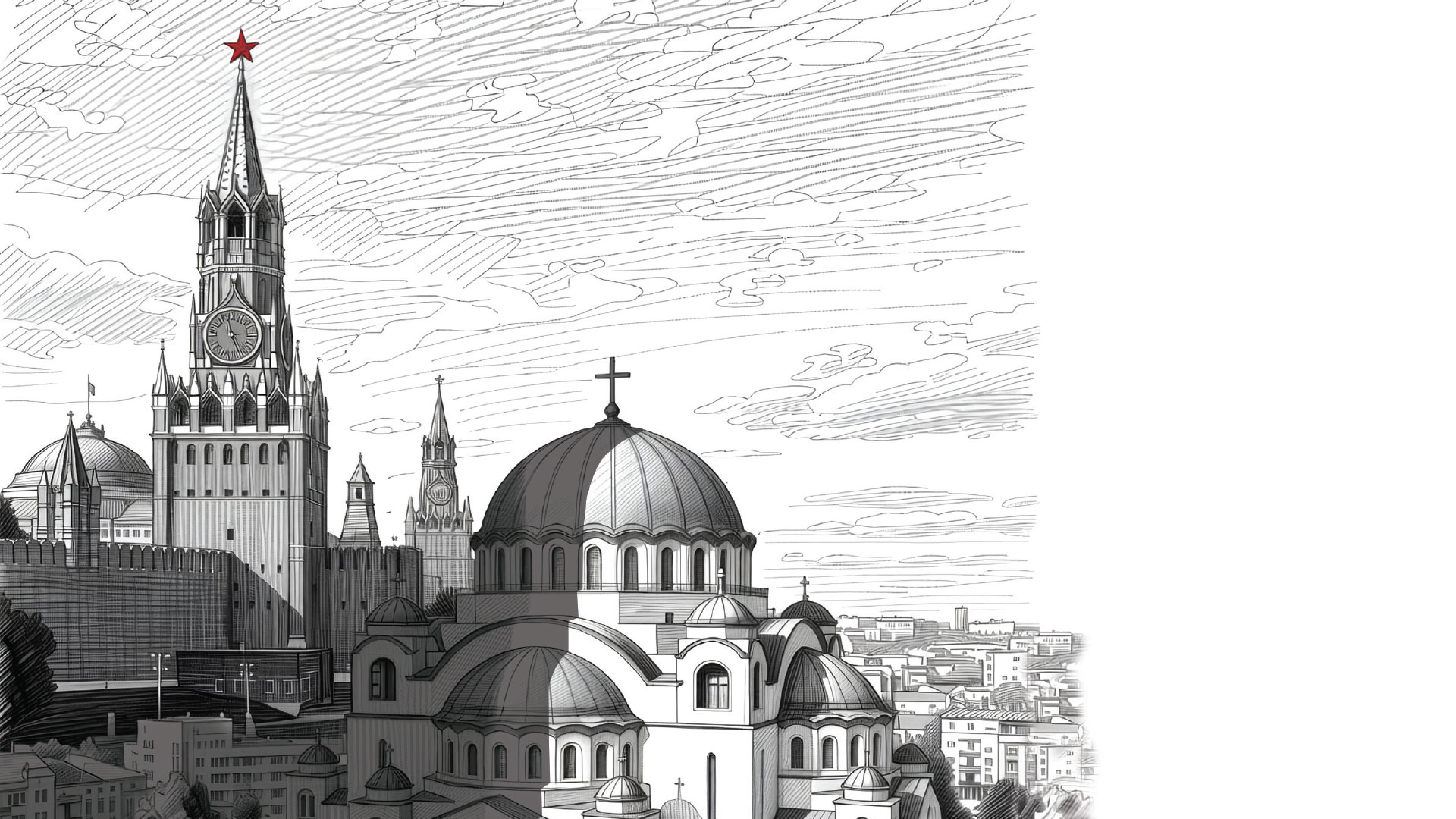
This paper examines how the Serbian Orthodox Church (SOC) is portrayed in existing research and media discourse, primarily as a major conduit of Russian influence in the Western Balkans through narratives tied to the Kremlin’s “Russian World” project and hybrid warfare activities.

Date: 31.03.2026.
Author: Belgrade Centre for Security Policy
Since the violent breakup of Yugoslavia, Serbia has played a pivotal role in the Balkans as the largest of the post-Yugoslav nation-states. Over the past decade, the current Serbian regime has become an influential regional actor, employing a wide range of political, informational, economic, cultural, and security-related instruments to shape its strategic position in the region. Increasingly, Serbian regional policy is framed through the political concept of the “Serbian World” (Srpski svet), which refers to the idea of maintaining a unified political, cultural, and informational space linking Serbia with Serb communities in neighbouring states.

Date: 24.03.2026.
Author: Dr Srđan Cvijić |
This publication assesses how six external actors - Russia, China, Türkiye, the United Arab Emirates (UAE), Israel, and Azerbaijan - engage with the Western Balkans (WB) and how such engagement affects the European Union (EU) enlargement process.

Date: 03.11.2025.
Author: Belgrade Centre for Security Policy
This report examines the concept of the Serbian World as a framework for Serbian influence in the Western Balkans, promoted by political elites indirectly and more directly by affiliated actors in Serbia and region. While not an official state policy, the idea functions as a powerful narrative tool, blending nationalism, historical revisionism, and strategic influence to sustain Serbia’s regional leverage and consolidate domestic political control.

Date: 31.10.2025.
Author: Belgrade Centre for Security Policy
Political, media and economic influences of certain actors continue to strongly define the region’s security landscape, concluded participants of the workshop on security and stability impacts in the region, held on 23 October 2025, at the Civic Energy Center (CEC) in North Mitrovica.
Date: 22.10.2025.
Author: Jelena Pejić Nikić |
This policy paper examines Western Balkan stakeholders' perspectives on what is needed for meaningful enlargement and the EU reforms they consider essential for an effective expanded Union. Field research in spring and summer 2024 included 16 high-level interviews with representatives from all six countries of the region.