


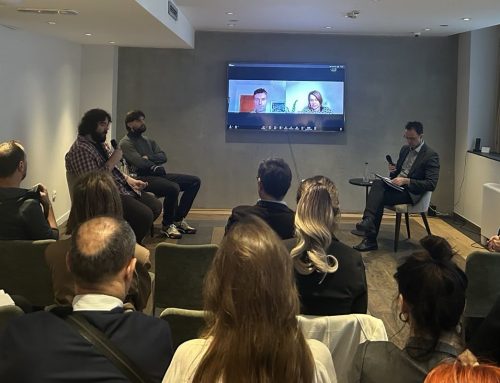
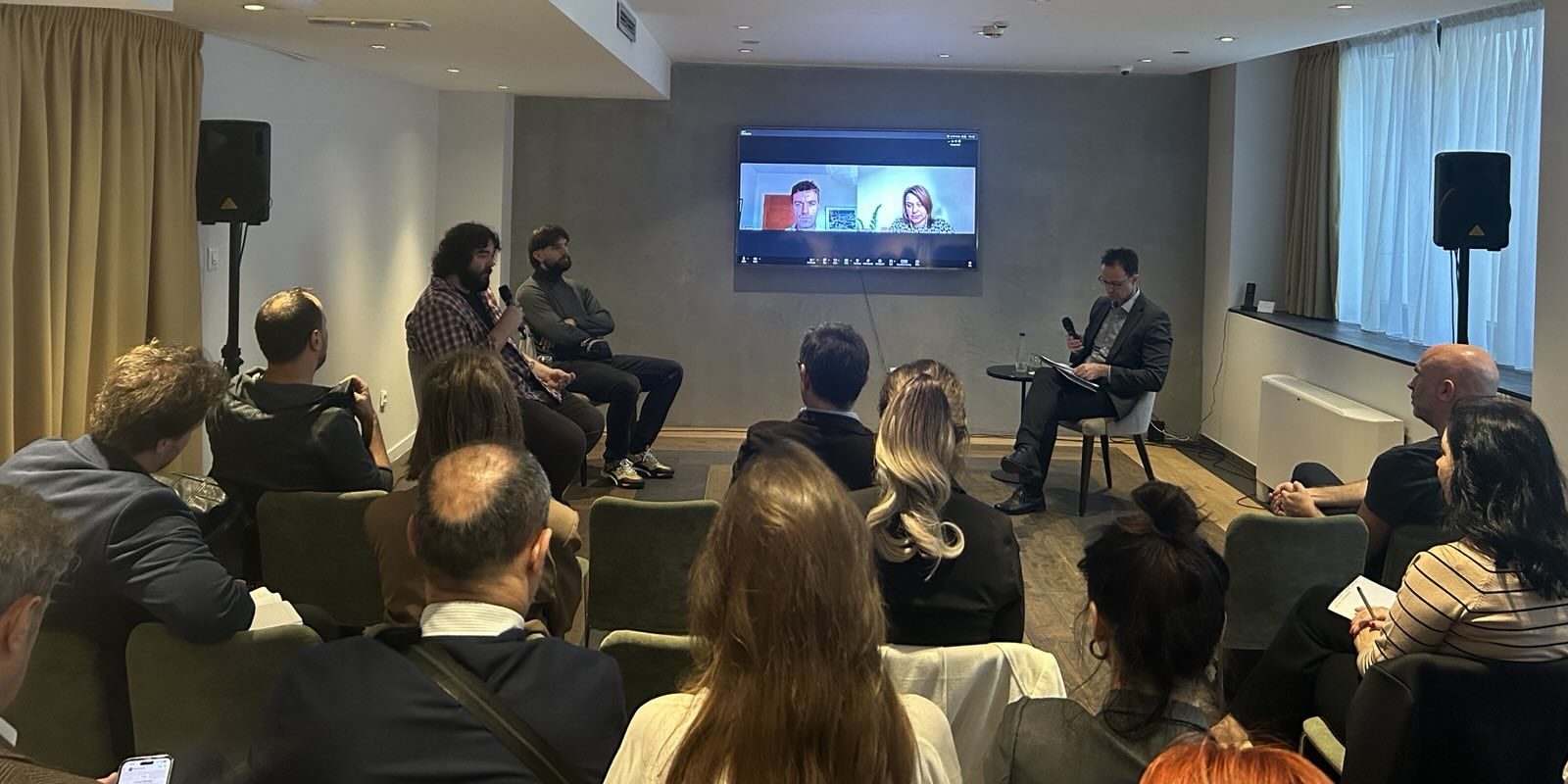
During the debate on linguistic aspects of gender equality BCSP director Sonja Stojanovic Gajic explained the various prejudices women face in the security sector. She highlighted that the use of words such as soldier in feminine are often even prohibited by women employed in the security sector due to the fact that they have been socialized in a different system.
The Head of the EU Delegation to Serbia Michael Davenport said that language and the use of the feminine in linguistics is not included in the enforcement of European standards. The trend in English, as he explained, is to reduce the use of the feminine form of a profession, such as actress, despite their normalization over decades, in an effort to avoid gender differentiation.
The Commissioner for Protection of Equality Nevena Petrusic pointed out that in advanced democratic countries, such as Austria, the use of the masculine as gender-neutral is considered a form of discrimination and that such practice can be reported to the ombudsman. Petrusic stressed the fact that gender parity of men and women has been declared, but the existing resistance towards the linguistic respect of gender demonstrates resistance towards the basic idea of equality.
The state secretary for the Ministry of Culture Gordana Predic explained that for over a decade girls represent the majority of students in Serbian universities, but that they are two times less likely to acquire employment. Furthermore, Gordana Predic stressed that the average monthly salary of educated women in Serbia is approximately 17.000 dinars less than that of men.
Journalist Olja Beckovic explained that she doesn’t perceive a problem in inequality towards women because women are more dominant in journalism. She added that, if she were to go hunting, she would not like to be referred to as a hunter in feminine, but rather a hunter. Contrarily, actress Mirjana Karanovic claims that this is not just a matter of women’s rights, but rather human rights.
Linguist Vlado Djukanovic said that the Serbian language is particular in that, when something is said in the masculine form, it can also be expressed in the feminine, and that in this sense language does not pose an obstacle, but rather that obstacles are set by people.
The debate on the occasion of International Women's Day was organized by The Delegation of the European Union to the Republic of Serbia and the Commissioner for Protection of Equality.
Text translated by BCSP intern Ana Djordjevic.



Leave A Comment
You must be logged in to post a comment.