SHARE
:
A plan for future pandemic challenges is urgently needed!
The discussion entitled "Post-pandemic dilemmas: Are we safer or more vulnerable?" held on March 23, 2023, at the Metropol Hotel, organized by the Belgrade Centre for Security Policy (BCSP), was an opportunity to discuss the lessons learned from the COVID-19 pandemic, the country's readiness to respond to a possible next pandemic, as well as the impact of the pandemic on people's mental health.
Igor Bandović, the director of the Belgrade Centre for Security Policy, opened the panel discussion, while Draga Šapić, psychologist (PIN), and prof. Dr. Radina Vučetić, historian and full professor at the Faculty of Philosophy, discussed the topic. The research results on pandemic management in Serbia and the Western Balkans, conducted by the Belgrade Center for Security Policy, were presented by Srđan Hercigonja, senior researcher and program manager. Journalist Filip Lukić moderated the discussion.
During the first panel, as the most critical post-pandemic conclusions, Srđan Hercigonja singled out the complete dominance of politics over the profession in the process of managing the pandemic, lack of transparency when it comes to the vaccine procurement, medical equipment, data manipulation on the numbers of infected and deceased, but also the way of communication – from the spread of panic to completely ignoring the pandemic.
Dr. Radina Vučetić, the author of the book “Invisible Enemy: Variola Vera 1972”, looked back on the Variola epidemic. She pointed out that Yugoslavia was seriously preparing for the quarantine disease emergency by opening laboratories, making a detailed plan for dealing with the crisis, providing transportation for the infected, and creating a list of epidemiologists and instructions for doctors and technicians. Professor Vučetić emphasized that there is no such plan today because we have neither the state nor the society: “The state used to invest in experts and trained staff that we no longer have today. There was absolute professional dominance at the time, and doctors made statements exclusively. There was no mistrust in the health care system, and no panic spread. After Variola, they started the discussions immediately, and serious questions were asked in the assembly, even though there was a one-party system”.
Psychologist Draga Šapić spoke about the level of psychological distress, uncertainty, and mental health during the pandemic. “All this led to confusion among people, they were overwhelmed by different information, and the increased fear was visible when restrictive measures were announced. How to communicate with citizens is more important than what is communicated. We should insist on positive messages, not on intimidation and punishment. The way of communication should be adapted to a society’s social and cultural characteristics,” said Draga Šapić.
While crises are supposed to unite society, that did not happen this time. When asked if mistrust prevented us from doing so, Šapić stated that people’s confusion was the main problem. The various messages they received caused them to doubt everything, while trust in any public structure decreased over time. At the same time, the information through social networks and personal communication channels grew stronger.
Hercigonja also mentioned that the pandemic affected Serbia in a period of strengthening authoritarian tendencies and was used to continue with the state capture. When asked about the trust in the health system after the pandemic, a senior BCSP researcher replied: “We need to discuss the experts’ outflow. We are not safer now and are unprepared for a (new) pandemic. No one talks about it anymore. The reform of global health governance is urgent and requires a multilateral approach, and we are living in a new cold war era”.
Professor Vučetić predicts that the biggest 21st-century problems will be related to viruses and pandemics. She followed up on the fact that during the invasion of Ukraine, Russia mentioned the fear of bioterrorism since the USSR had a developed system for developing biological and chemical weapons and a network of secret laboratories. “This is something we have to deal with globally. Whether it’s just nature, through the virus mutation or bioterrorism – we are doomed,” concluded the professor.
When asked if we are more mentally prepared for a new pandemic, Draga Šapić said: “The pandemic has shown how adaptable people are. We are a resilient species but also a species that easily forget and easily gets used to good things. We would be more mentally prepared if a pandemic were to occur soon. Solidarity is important and should be applied at the national level as well. We need to nurture solidarity among people.”
This report was made possible with support from the Rockefeller Brothers Fund (RBF). The opinions and views of the authors do not necessarily state or reflect those of the RBF.
Tags: COVID 19, Pandemija, upravljanje pandemijom
RELATED

Date: 24.06.2026.
Author: Belgrade Centre for Security Policy
Civil society organisations express deep concern over the direction of the investigative actions concerning the incident of 15 March 2025, which have recently been undertaken by the Higher Public Prosecutor’s Office in Belgrade. The current conduct of this Prosecutor’s Office is the exact opposite of the thorough and impartial investigation that such a grave case requires. Instead, it indicates a deliberate intention to cover up the actual incident and divert public attention towards the political persecution of victims and all those who have provided them with legal or other forms of support.

Date: 02.06.2026.
Author: Belgrade Centre for Security Policy
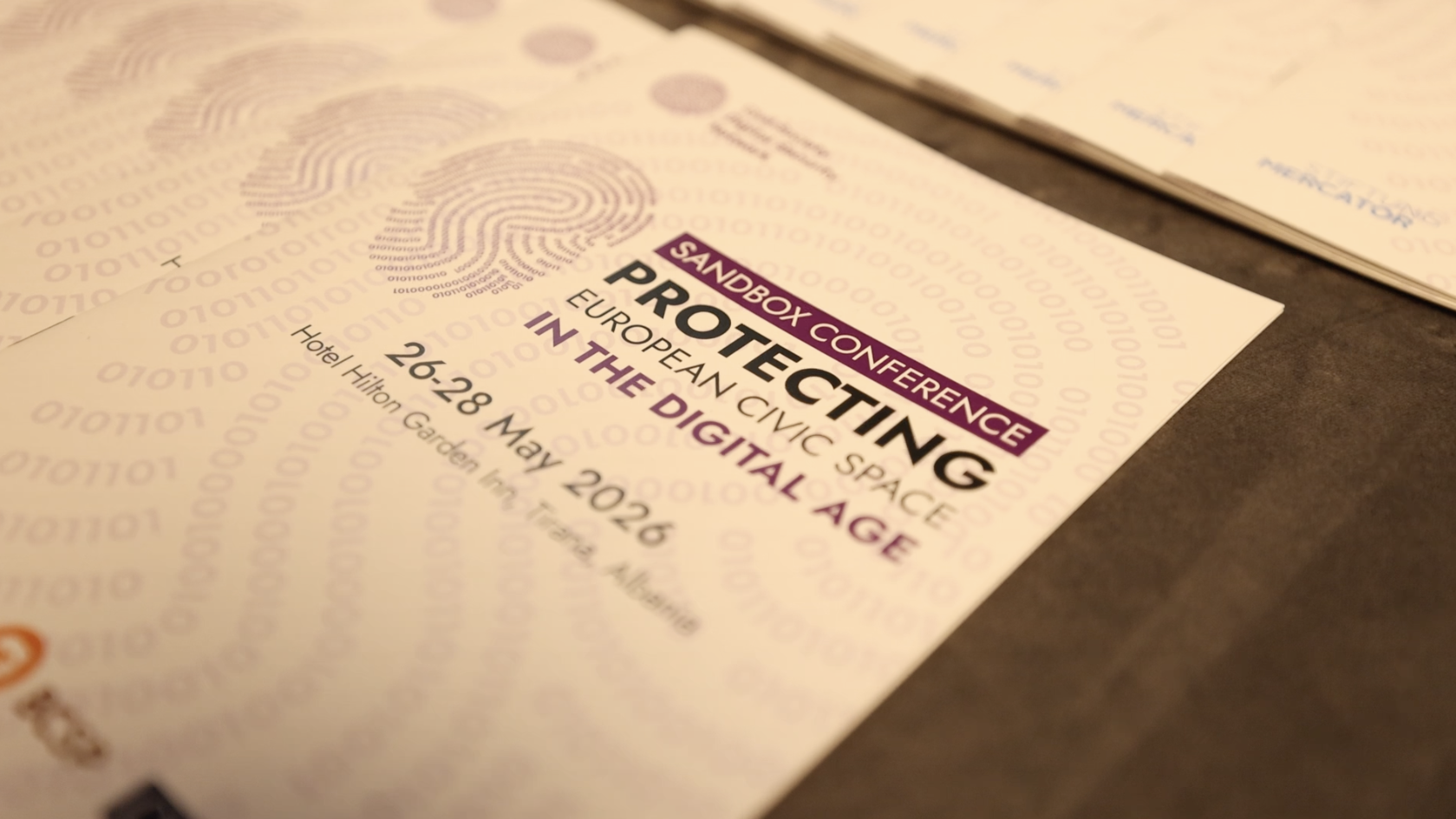
The following transcript is from the opening speech by Pieter Omtzigt, former member of the Parliamentary Assembly of the Council of Europe (PACE) and former rapporteur on Pegasus and other spyware and secret state surveillance. The speech was delivered at the Sandbox Conference organised by the Civil Society Digital Security Network (CSDSN) in Tirana on 27 May 2026.
Date: 29.05.2026.
Author: Belgrade Centre for Security Policy
Civil Society Digital Security Network (CSDSN) brought together human rights defenders, journalists, activists, legal experts, and digital security specialists in Tirana, Albania, from 26 to 28 May 2026 for the Sandbox Conference "Protecting European Civic Space in the Digital Age". Supported by Stiftung Mercator, the conference served as a safe space for open dialogue on the growing digital threats facing civil society across the Western Balkans and the European Union.