Presentation of the Guidebook on Cooperation in Home Affairs in the EU
Belgrade Centre for Security Policy (BCSP), in cooperation with the Center for Civil Society Development – PROTECTA, is organizing a presentation of the publication “Guidebook through Cooperation in Home Affairs in the European Union”, which is to be held on 23 November at 12 am in the EU info corner in Nis. ...
Belgrade Centre for Security Policy (BCSP), in cooperation with the Center for Civil Society Development – PROTECTA, is organizing a presentation of the publication “Guidebook through Cooperation in Home Affairs in the European Union”, which is to be held on 23 November at 12 am in the EU info corner in Nis.
The aim of the meeting is to inform the interested public about the activities in the process of negotiations on Serbia's membership in the EU and to encourage wider participation in this process through a better understanding of the issues and the pace of reforms that await Serbia in the field of police cooperation.
The speakers will be:
- Milan Stefanovic, executive director of Center for Civil Society Development – PROTECTA
- Andrej Stefanovic, Belgrade Centre for Security Policy
- Bojan Elek, Belgrade Center for Security Policy
- Andrej Petrovski, SHARE Foundation
Police cooperation is one of the fastest growing areas of cooperation within the European Union and one which importance is growing in light of interconnected security challenges, such as migration, terrorism, organized and cyber criminal. In the context of the accession negotiations with the EU, this question lies within the area of freedom, justice and security (Chapter 24), and Serbia has committed to align its legal framework to introduce European best practices in the coming period.
However, the policy of cooperation in the field of internal affairs is the least known, even among experts in EU law and policy, as it has long been practiced outside of the institutional framework, through direct cooperation of Member States and without the supervision of the common institutions. In addition, there are almost no publications on the topic of police cooperation in Serbian, and the methods and impact of cooperation are not covered discussed enough in public. Therefore, this guide provides a user-friendly and reliable source of information on the policies of police cooperation within the EU. Our goal is to bring the readers closer to the dynamics, key topics and interests specific to this area of cooperation.
For additional questions regarding the gathering, contact Milan Stefanovic, by e-mail (centar@protecta.org.rs) or telephone number (018/522 788).
DETAILS
DATE: 20161123
TIME: 12:00:00
LOCATION: EU info kutak Niš
TOPICS: EU, Foreign Policy
CONTACT: dragana.belanovic@bezbednost.org
SHARE
RELATED
Date: 10.02.2026.
Author: Belgrade Centre for Security Policy
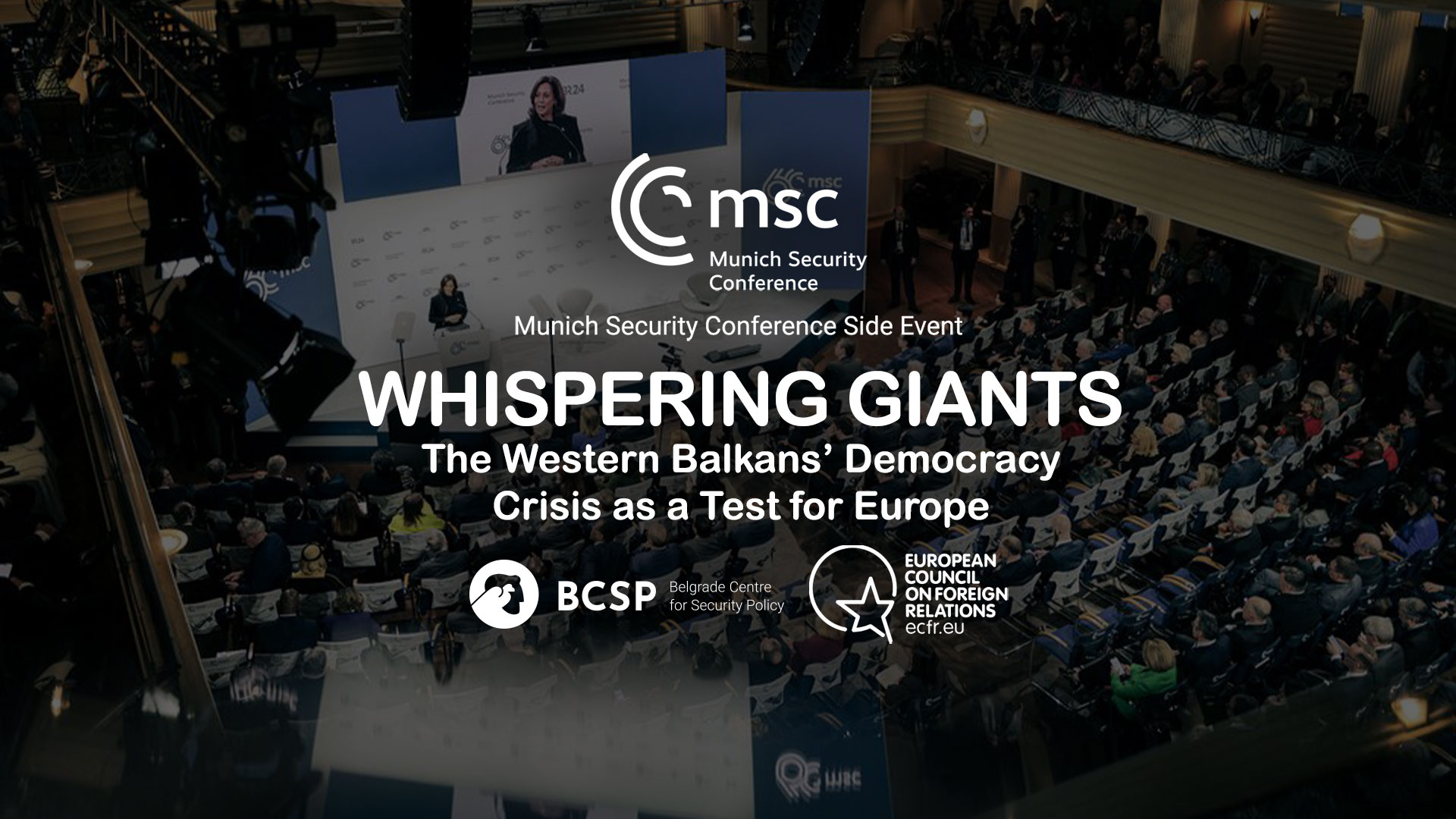
The Belgrade Centre for Security Policy (BCSP) and the European Council on Foreign Relations (ECFR) are co-hosting a side event "Whispering Giants: The Western Balkans’ Democracy Crisis as a Test for Europe," at this year’s Munich Security Conference on 13 February.

Date: 18.02.2025.
Author: Belgrade Centre for Security Policy
On 20 February 2025. at Envoy Conference, Belgrade Centre for Security Policy will present the latest research “Non-Malign Influence - What Does the Russian Community in Serbia Think and Do”.

Date: 10.02.2025.
Author: Belgrade Centre for Security Policy
The Belgrade Centre for Security Policy (BCSP) and the European Council on Foreign Relations (ECFR) are co-hosting a side event "Unarmed in the Unseen War: How to Counter Hybrid Challenges in the Western Balkans and Europe," at this year’s Munich Security Conference on 14 February.