RELATED

Date: 21.07.2026.
Author: Dr Srđan Cvijić | Igor Bandović | Marko Drajić | Predrag Petrović |
In November 2025, the Belgrade Centre for Security Policy published the policy brief Political and Institutional Crisis in Serbia: Possible Scenarios. The brief outlined four scenarios and their corresponding outcomes.
Date: 28.05.2026.
Author: Belgrade Centre for Security Policy
As the coordinator of the Working Group for Chapter 24 within the National Convention on the European Union (NCEU), BCSP compiled joint comments from nine NCEU member organizations on the Draft Law on Internal Affairs, which was subject to official public debate in April 2026.
Date: 07.04.2026.
Author: Belgrade Centre for Security Policy
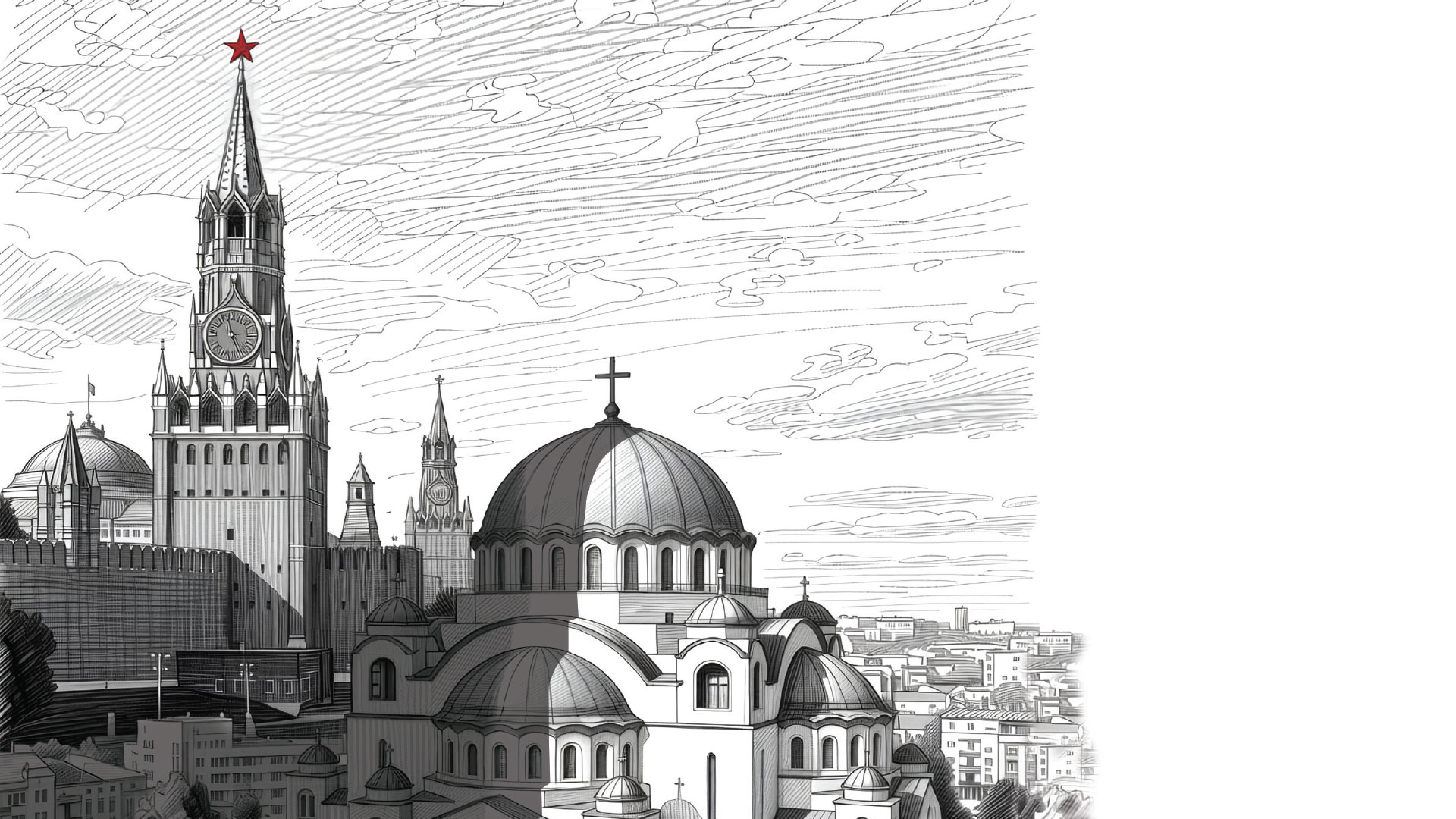
This paper examines how the Serbian Orthodox Church (SOC) is portrayed in existing research and media discourse, primarily as a major conduit of Russian influence in the Western Balkans through narratives tied to the Kremlin’s “Russian World” project and hybrid warfare activities.

Date: 24.03.2026.
Author: Dr Srđan Cvijić |
This publication assesses how six external actors - Russia, China, Türkiye, the United Arab Emirates (UAE), Israel, and Azerbaijan - engage with the Western Balkans (WB) and how such engagement affects the European Union (EU) enlargement process.

Date: 09.02.2026.
Author: Maja Bjeloš |
The concept of the “colour revolution” has shifted from describing democratic uprisings in post-socialist states to serving as a powerful tool of authoritarian control. In Serbia, the ruling elite—drawing heavily on the Russian strategic playbook—has reframed the term as a symbol of foreign subversion aimed at overthrowing the government and destabilising the country. Since 2012, this narrative has been systematically used to delegitimise dissent, protests, and civic mobilisation.
Date: 01.02.2026.
Author: Belgrade Centre for Security Policy
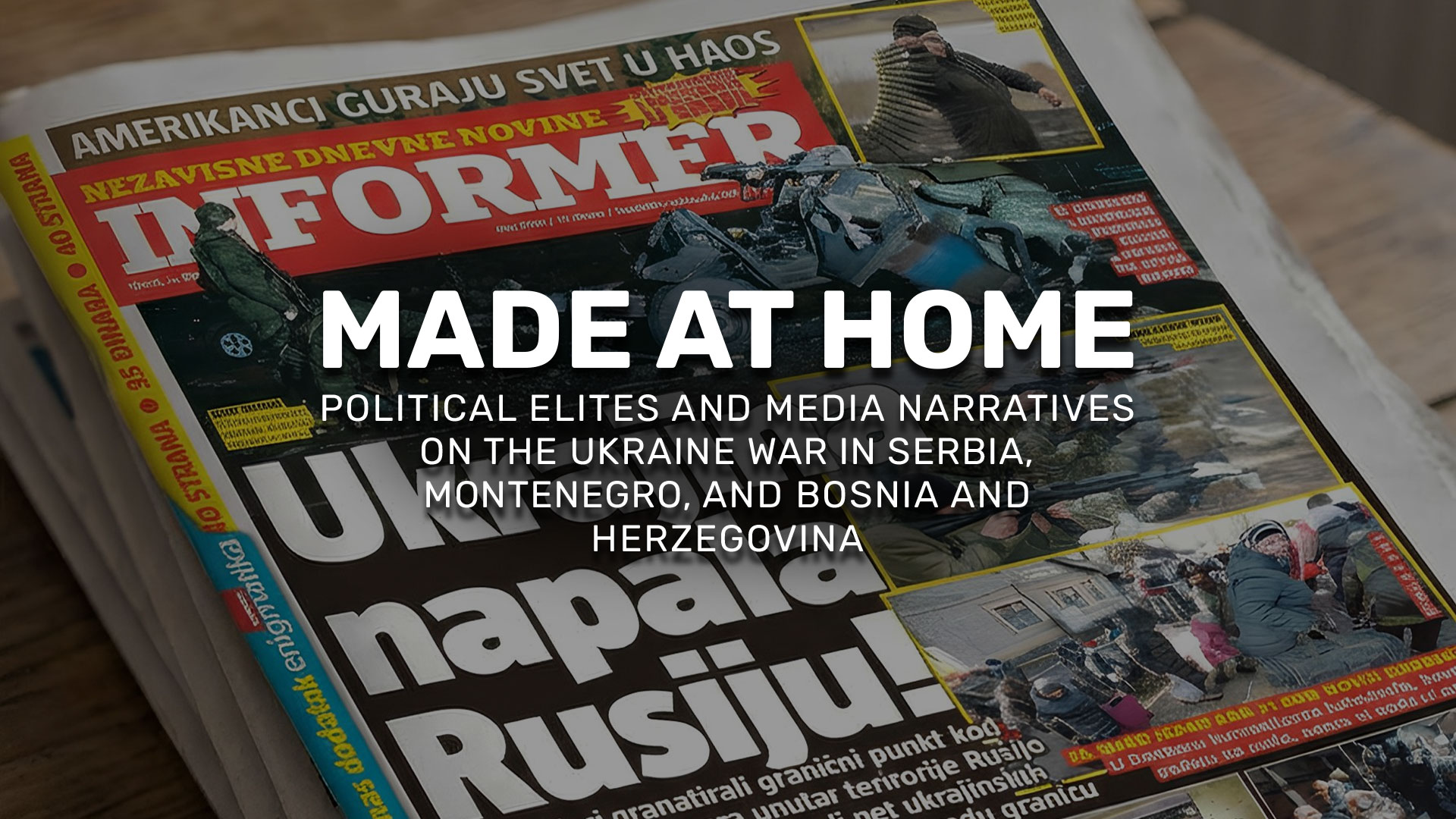
The war in Ukraine has reverberated across the Western Balkans in ways that reflect the region’s own political dynamics more than the influence of any external actor, including Russia. In Serbia, Montenegro, and Bosnia and Herzegovina, media coverage and public narratives surrounding the conflict have been shaped primarily by domestic political realities, local media structures, and long-standing identity divides.

Date: 31.10.2025.
Author: Belgrade Centre for Security Policy
Political, media and economic influences of certain actors continue to strongly define the region’s security landscape, concluded participants of the workshop on security and stability impacts in the region, held on 23 October 2025, at the Civic Energy Center (CEC) in North Mitrovica.
Date: 22.10.2025.
Author: Jelena Pejić Nikić |
This policy paper examines Western Balkan stakeholders' perspectives on what is needed for meaningful enlargement and the EU reforms they consider essential for an effective expanded Union. Field research in spring and summer 2024 included 16 high-level interviews with representatives from all six countries of the region.

Date: 01.06.2025.
Author: Belgrade Centre for Security Policy
On 26 May, the Belgrade Centre for Security Policy (BCSP) and the Faculty of Political Sciences (FPN), University of Belgrade, co-organised the conference “Frontlines of Influence: The EU’s Role in the Western Balkans and the Eastern Partnership”. The event was held at the Europe House as part of the GeoPowerEU and REUNIR projects.