RELATED

Date: 02.06.2026.
Author: Belgrade Centre for Security Policy
The following transcript is from the opening speech by Pieter Omtzigt, former member of the Parliamentary Assembly of the Council of Europe (PACE) and former rapporteur on Pegasus and other spyware and secret state surveillance. The speech was delivered at the Sandbox Conference organised by the Civil Society Digital Security Network (CSDSN) in Tirana on 27 May 2026.
Date: 29.05.2026.
Author: Belgrade Centre for Security Policy
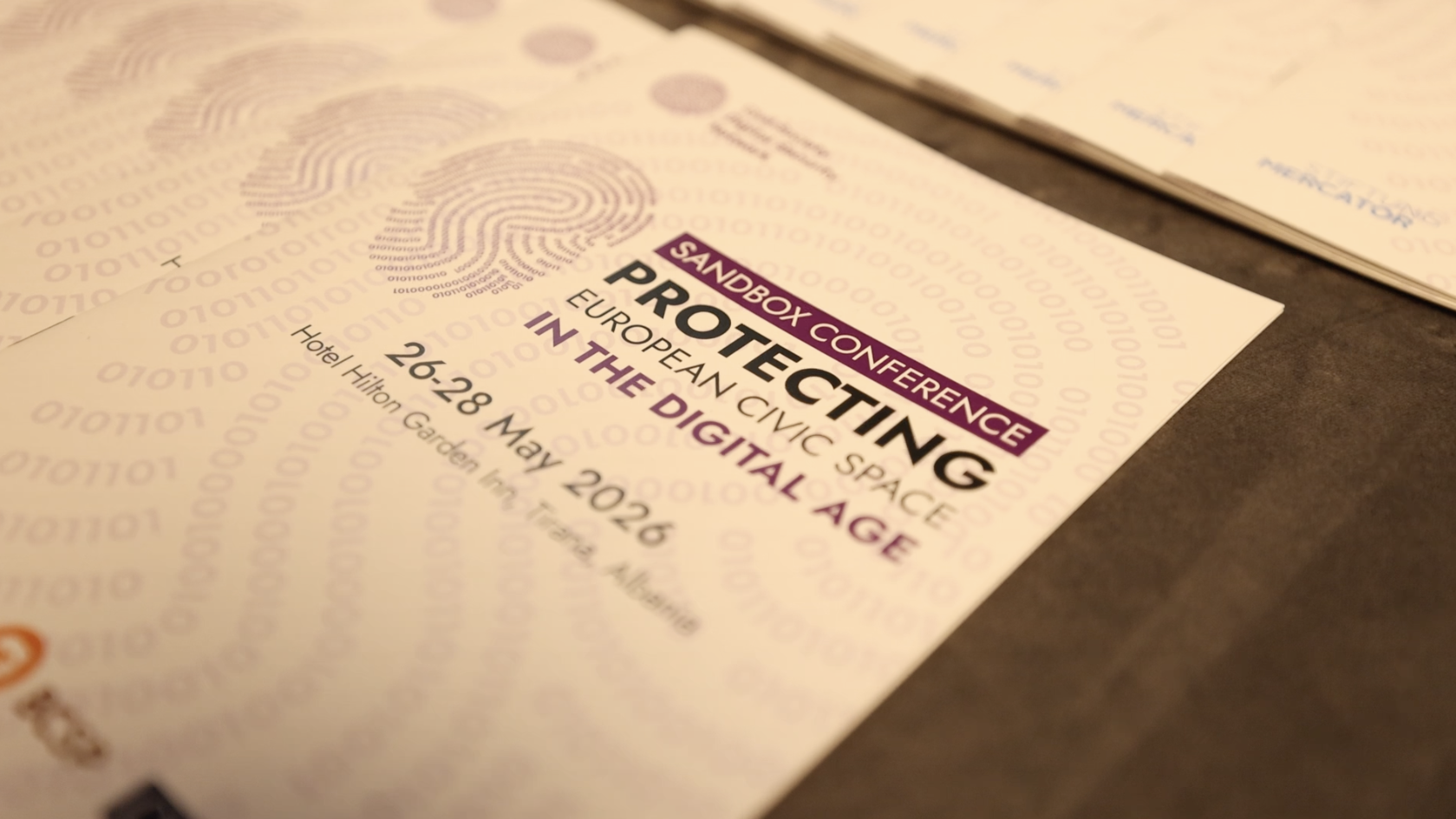
Civil Society Digital Security Network (CSDSN) brought together human rights defenders, journalists, activists, legal experts, and digital security specialists in Tirana, Albania, from 26 to 28 May 2026 for the Sandbox Conference "Protecting European Civic Space in the Digital Age". Supported by Stiftung Mercator, the conference served as a safe space for open dialogue on the growing digital threats facing civil society across the Western Balkans and the European Union.

Date: 27.05.2026.
Author: Anđela Savić |
Civil society organisations, journalists, and human rights defenders across the Western Balkans and European Union (EU) are operating in a digital environment defined by raising threats and inadequate protection. This analysis presents findings from a needs assessment survey conducted within the “Defending Digital Freedoms: Strengthening Civil Society Resilience against Digital Repression in Europe” project, gathering 239 responses from 11 countries (six Western Balkan and five EU member states).

Date: 28.11.2025.
Author: Belgrade Centre for Security Policy
The Belgrade Centre for Security Policy (BCSP) recently received an official notification from the Microsoft Threat Intelligence Center regarding a cybersecurity incident affecting our systems.

Date: 04.11.2025.
Author: Belgrade Centre for Security Policy
At the panel discussion “Freedoms Under Pressure: Civil Society and Digital Oversight in Serbia and Abroad”, organised by the Belgrade Centre for Security Policy (BCSP) on 31 October in Belgrade, speakers warned that digital surveillance and spyware use are rapidly becoming tools of political control in Serbia and across Europe, posing severe risks to human rights and democracy.

Date: 26.01.2025.
Author: Belgrade Centre for Security Policy
The point of departure for this analysis was the idea that spyware by its nature is indiscriminate, comprehensive and covert surveillance tool, structurally incompatible with the principles of necessity, proportionality and targeted data processing.

Date: 15.12.2023.
Author: Belgrade Centre for Security Policy |
In October, two members of Serbian civil society organizations were notified that a “state-sponsored” attack was detected on their devices.

Date: 31.07.2023.
Author: Belgrade Centre for Security Policy |
People’s ever-stronger reliance on digital technologies and devices has caused states and private actors to increasingly reach for various systems and tools for the digital surveillance of citizens. Consequently, high-resolution cameras, artificial intelligence, programmes for biometric recognition, tools for automatic data collection from the Internet, and intrusive software for monitoring mobile phones have become the everyday reality of people worldwide.