SHARE
News:
Gender analysis in the police
How to introduce a gender perspective into the strategic planning and analysis in the police and what are the specific tools for gender analysis, were some of the questions that were answered at the seminar for analysts and planners in the Ministry of Interior of the Republic of Serbia (MoI).
{image1}The aim of the seminar “Gender analysis in the police”which was held on 2nd to 4th of October, 2013 in Kovacica, was to gather relevant participants who are engaged with strategic planning in the Ministry of Interior and sensitize them to take into consideration a gender perspective in their daily work.
In an interactive manner, the BCSP director, Sonja Stojanovic Gajic explained the participants importance of gender in regard to the strategic analysis and planning in the police. After that, she familiarized participants with the main concepts of gender, sex and gender mainstreaming.
‘’Having in mind that different roles which women and men have in the Serbian police are the mirror of society, it is important to ask ourselves what kind of police we want. The police need to represent every citizen in the society, and only in that way it can respond to different security threats of both women and men”, pointed out Sonja Stojanovic Gajic.
Swedish case study on introducing more women into the police force
{image2}The expert for gender and diversity in the Swedish police, Helena Casu Hall gave an interesting overview of good practices in increasing the number of women in the police. For example, the number of women in the Swedish police cannot be lower then 40% according to the Swedish legislation.
“The issue of gender equality in the police is not only a question of human rights, but it is about the development of the organization as well“, asserted Helena Casu Hall.
As a very interesting example of the gender equality in the Swedish police she pointed out the concept of double leadership which allowes two people to share a managerial position as to balance their professional and private life better.{split}
{image3}Gender sensitive statistics in Serbia
The representative of the Statistical Office of the Republic of Serbia, Jana Kacarevic explaind the importance of gender sensitive statistics and the impact of gender roles on statistics. By giving a lot of practical examples, Kacarevic showed that statistics is not gender neutral and that can be of great significance in relation to strategic planning and analysis. The participants of the seminar pointed out the fact that in Serbia people pay attention to statistics only in cases of some tragedy and do not realize that gender sensitive statistics can help us to prevent different crimes.
Gorica Latinkic from theSector for Internal Control, Ministry of Interior RS (MoI) and member of the Analytical group for the implementation of the National Action Plan 1325 onWomen, Peace Security gave a presentation on data available for the purposes of personnel development track in the MoI. Besides that, she also talked about different types of records in the Ministry of Interior that include gender sensitive statistics. It was concluded that the MoI lacks certain data in order to fulfill gender equality goals.
“It is important to have additional parameters in data collection on career system of women, and the system of promotion based on merits and education. It is also of great importance to implement automatic and gender sensitive data collection of complaints and grievances”, said Gorica Latinkic.
Incorporating a gender perspective in disaster risk management
How gender affects the outcomes of natural disasters in Serbia and abroad showed Zorica Mrsevic, from the Institute for Social Sciences and professorat the Faculty for European Legal and Political Studies in Novi Sad (former Deputy Ombudsperson).
“Even though people usually think that natural disasters affect everyone, the reality shows that they are not gender neutral”, pointed out Zorica Mrševic.
One of the proofs for that can be seen in the number of victims of Cunami(2004), where women comprised 80% of victims because they were on the shore waiting for their husbands to return from fishing.
The last day of seminar was dedicated to concrete tools for gender analysis in different areas of policing. For example, participants had an opportunity to analyze different security threats in Sweden and compare it with Serbia. Moreover, the participants took into consideration a gender perspective in the education process in the MoI and process of complaints and grievances as well.
The seminar gathered participants from the following organizational units within the MoI: Bureau for Strategic Planning, Directorate for Analytics, Bureau for International Cooperation and EU integration. There were also participants from the Directorate for Education, Bureau for Information of Public Importance, Directorate for Human Resources, Bureau for Complaints and Grievances, General Police Directorate and Sector for Internal Control etc.
RELATED

Date: 18.12.2025.
Author: Belgrade Centre for Security Policy
The Civil Committee for the Protection of Human Rights Defenders and Whistleblowers strongly condemns the threats directed at journalist Vuk Cvijić, which occurred on December 17 and were allegedly triggered by an article he wrote for the weekly Radar.
Date: 04.11.2025.
Author: Belgrade Centre for Security Policy
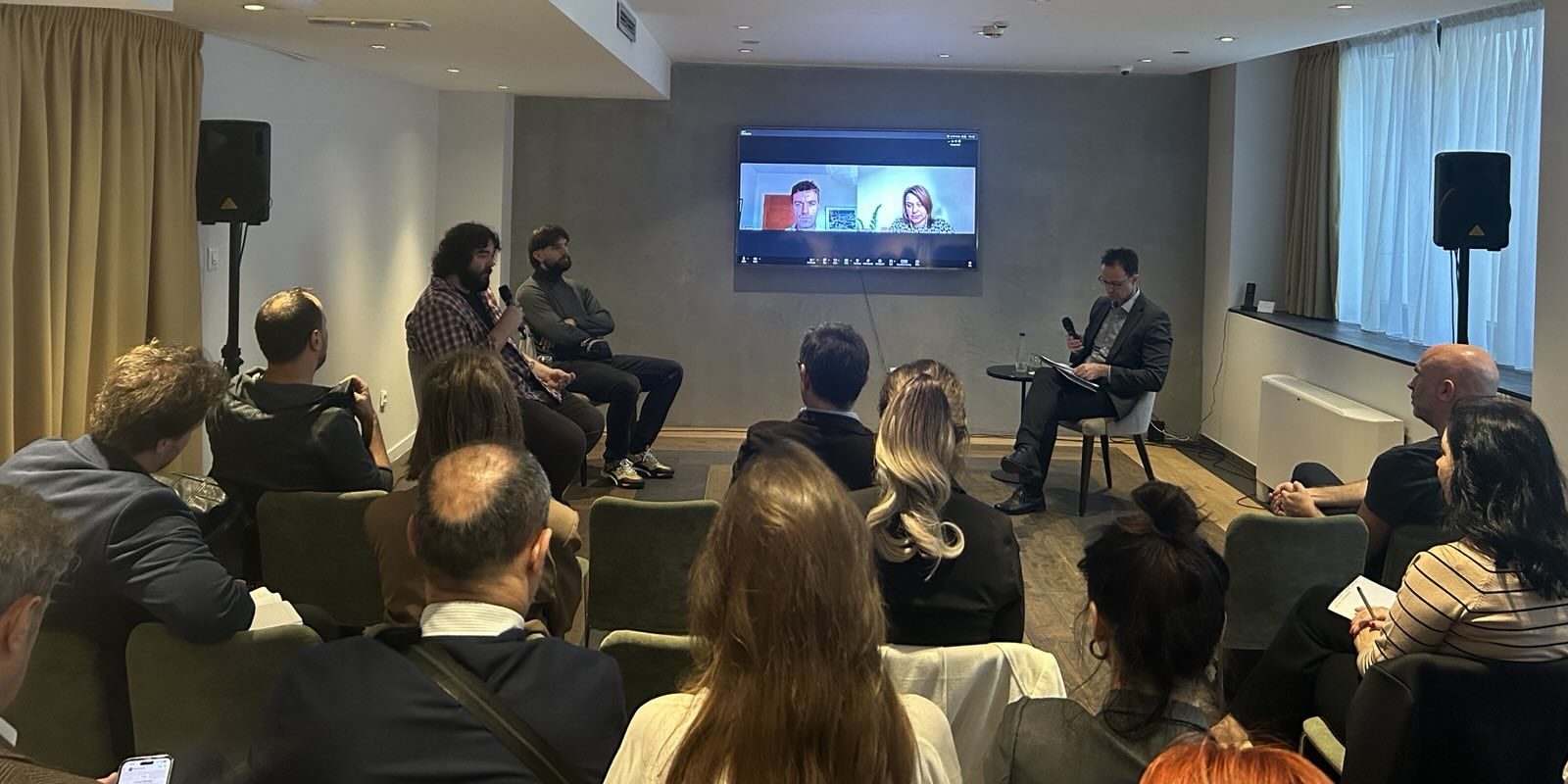
At the panel discussion “Freedoms Under Pressure: Civil Society and Digital Oversight in Serbia and Abroad”, organised by the Belgrade Centre for Security Policy (BCSP) on 31 October in Belgrade, speakers warned that digital surveillance and spyware use are rapidly becoming tools of political control in Serbia and across Europe, posing severe risks to human rights and democracy.

Date: 18.09.2025.
Author: Belgrade Centre for Security Policy
The Civil Committee for the Protection of Human Rights Defenders and Whistleblowers calls on the competent Public Prosecutor’s Office to immediately act upon information about an alleged plot to assassinate student Pavle Cicvarić, as publicly stated on Informer television by Siniša Vučinić, a member of the Main Board of the Serbian Progressive Party.