Depoliticisation of Security Services in the Region

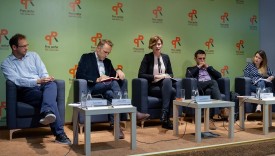
Depoliticizing security services in Western Balkans is impossible without the joint insistence of citizens, media and civil society organizations, it was concluded at the discussion organized by Institute Alternative on 6 December 2019 in Podgorica, attended by BCSP Executive Director Predrag Petrovic. Petrovic warned that in Serbia the centralization of ...
Joint Effort of the Western Balkans and the EU is Key for Rule of Law in the Region

The current challenges of the European Union's enlargement to the Western Balkans are a good opportunity to rethink our own efforts towards the realization of the rule of law. This was one of the conclusions of the discussion "What can we do for the rule of law in the Western ...

The EU Should React to the Capture of Security Services in the Western Balkans

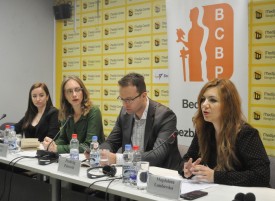
The European Union should respond to the signals of abuse of the security-intelligence services highlighted by civil society in Serbia and Montenegro before a big-scale affair arises like in North Macedonia in 2015, it was concluded at the event organized by the Belgrade Centre for Security Policy (BCSP) on 4 ...

Battle for the rule of law in the Western Balkans

{image1} Numerous incidents, starting from the Savamala case in Serbia, followed by the beating of protesters in Montenegro, together with the mass wiretapping scandal in Macedonia, signified the regression of the rule of law in the Balkans, is one of the conclusions of the second panel of the conference “Security ...

On the Rule of Law in the Western Balkans with the Representatives of the EU Institutions

Researchers from the Belgrade Centre for Security Policy, European Policy Institute from Skoplje and Institute Alternative from Podgorica were in a study visit to Brussels from 16-18. May, where they discussed the issues pertaining to the rule of law in Serbia, Macedonia and Montenegro with the representatives of EU institutions

The Role of Women in Police Reform in the Balkans

The european standard of representation of women in the police force is 30 percent, and according to the information available in Serbia, women currently make up 23 percent of employees, 18 percent in Macedonia, 14 in Kosovo, 13 in Bosnia and Herzegovina, 10 in Albania and nine percent in Montenegro, it was pointed out at the conference of the POINTPULSE network.

EU policy of conditioning is a major stimulus for regional security cooperation

Regional conference in Skopje has brought together think tanks from Macedonia, Albania, Serbia, Bosnia and Herzegovina, Kosovo, Montenegro and Croatia.

Uniting government and CSOs efforts in implementation of the UN 1325 in Western Balkans

The Regional Dialogue on Gender and Security: Uniting Governments' and CSOs’ Efforts in Implementation of the UNSCR 1325 Agenda gathered 47 representatives from state agencies, government equality bodies, ministries of defence, ministries of interior, local civil society organizations and international organizations from the Western Balkans: Albania, Bosnia and Herzegovina, Kosovo, Macedonia, and Serbia.

Almanac on Security Sector Oversight in the Western Balkans

This publication aims to provide an independent research-supported overview on the key achievements and weaknesses in the accountability of security sectors of Albania, Bosnia and Herzegovina, Croatia, Macedonia, Montenegro, Serbia and Kosovo, and to present what effect this has on the countries’ democratic transition.

On the Findings of One More Population “Census” in the Republic of Macedonia

29. march 2005. - Occasional paper No. 10Prof. Biljana Vankovska, Professor at the Philosophy Faculty in Skoplje

Go to Top