Civil Society Participation in the Security Sector Reform: Lessons from Slovakia

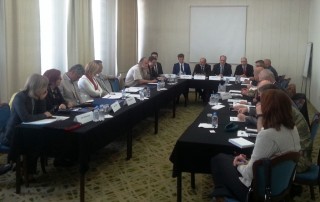
Lessons learned from Slovak security sector reform, country's priorities during OSCE chairmanship, its cyber security and fighting disinformation practices were some of the topics discussed during the study trip to Slovakia organized by OSCE Mission to Serbia and GlobSec for Serbian civil society organizations dealing with security issues from 10 ...

Participation of Local Actors is Needed for Successful Crisis Response

Academic Event at this year’s BSF was dedicated to answering the question how conflict-sensitive is the EU crisis response. Participants concluded that the EU shifted to a more pragmatic approach and improved its crisis response capacities, but that it needs to learn from both successes and failures more quickly. It ...

The importance of building interoperability of the Serbian armed forces for participation in multinational operations

New BCSP publication deals with Serbia-NATO cooperation aimed at enhancing interoperability of the Serbian Armed Forces (SAF) through military exercises and training. Interoperability building is of great importance for participation in multinational operations, where SAF members have to function in synergy with other countries’ armed forces.

The Western Balkans as a security exporter

In the Western Balkans, the awareness of the importance and potentials of civilian capacities for participation in peacekeeping missions is not sufficiently developed - concluded the first panel of the conference "Security Challenges as a Link between Citizens and Institutions", which the Belgrade Center for Security Policy organized on 21 ...

Serbia will contribute more in multinational operations

On the 27th of April 2016. in the Guard Palace of Topcider barracks in Belgrade, the expert disscussion „Participation of the Army of Serbia in multinatoonal operations-Experience and Perspectives“ was held and it was pointed out that  Republic of Serbia  has had long term experience in participation in UN missions ...

CSO participation is very important in making the Negotiating position for Chapter 24

At the meeting organized by BCSP was highlighted that the opening of Chapter 24 of the negotiations for Serbia’s membership in the European Union is possible in the first half of 2016.

Presentation of civil capacities of Western Balkans countries for participation in peacekeeping missions

Belgrade Centre for Security Policy organized on October 21st 2014 a presentation of findings from regional maping study on civil capacities for peacekeeping missions.  BCSP researcher Marko Milosevic and Gordan Bosanac from the Center for Peace Studies from Croatia presented findings from their countries and a regional perspective. The objectives ...

Enable the participation of civilians in peacekeeping missions

Legislation related to participation of civilians in peacekeeping missions was in focus of the panel discussion "The capacity of Bosnia and Herzegovina for civilian participation in peacekeeping missions" held in Sarajevo on 12 May 2015. One of the speakers at the event was researcher from the Belgrade Centre for Security Policy Marko Milosevic.  BCSP ...

Anti-Mafia strategy requires civil society participation

Laura Garavini, MP of the Italian Parliament and the founder of the initiative "Mafia? Nein, danke!" and Riccardo Guido, advisor to the Anti-mafia Parliamentary Committee in the Italian Parliament, were panellists at the discussion Belgrade Centre for Security Policy (BCSP) organized with the support of the OSCE Mission to Serbia.

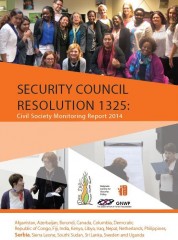
Security Council Resolution 1325: Civil Society Monitoring Report 2014

BCSP Researcher Maja Bjelos is co-author of the independent report on achievements in the implementation of UNSCR 1325 on Women, Peace and Security in Serbia in 2014. Analysis of the results was based on 11 indicators, with a focus on the assessment of women's participation, prevention and protection from violence and the promotion of gender perspective. The authors have offered specific recommendations to institutions, the United Nations and civil society organizations.

Go to Top