PUBLICATION: Analysis
Paper Fairy Tales VS Steel Brotherhood – Media Portrayals of Serbia’s Alliances in the Age of Pandemic
BCSP researchers Maja Bjeloš and Luka Šterić analyzed how media in Serbia reported about Chinese, Russian and EU help during the pandemics.
Because the pandemic was used as a framework for an excessive pro-Chinese campaign, the research examines how pro-Chinese narratives in mainstream media during the pandemic were used to position China, displacing Russia as Serbia’s main non-Western partner, while simultaneously propelling the anti-EU narrative of incompetence and hypocrisy. The analysis was carried out for the period between 1 March 2020 and 31 March 2021 and focused on two key events – media coverage of the first shipments of medical supplies to Serbia and media reporting of the supply of vaccines. Media monitoring included data collection using social listening software from the online portals of most-watched televisions (TV Happy, TV Prva), the most visited news portals (Blic, Kurir, Politika, B92 and Nova.rs), and the most circulated online portals of tabloids (Informer and Alo).
Chinese medical aid to Serbia during the COVID-19 pandemic attracted unprecedented foreign media attention and much speculation about a shift in Serbia’s foreign policy. Many foreign and domestic policy experts have interpreted the enthusiastic acceptance of Chinese aid by Serbian politicians as a departure from Serbia’s proclaimed accession to the European Union. Since Serbia did not greet Russian assistance with the same enthusiasm, this sparked speculation that Serbia is replacing Russia with China as its preferred eastern partner.
In Serbian media, the narrative of a ‘brotherhood’ has long been reserved for describing relations between Serbia and Russia. Serbia’s ruling political elite voluntarily promoted President Putin and Russia in the mainstream media to increase political support among pro-Russian votes and at the same time exaggerating Russia’s influence in Serbia as a bargaining chip with the West over its political goals. Due to the silent crisis of relations with Moscow, Belgrade officials saw the partnership with China as a stronger card to play ahead of the 2020 elections to convince voters that the government was capable of dealing with the COVID-19 crisis, as well as acquiring a new ally in the East to leverage in the West. Consequently, China emerged as a ‘savior of Serbs in trouble’ during the pandemic overshadowing roles of both Russia and the EU.
Supported by the International Republican Institute’s Beacon Project. The views expressed in this policy brief are solely those of the authors and do not reflect those of IRI.
Tags: china, COVID 19, eu, pandemics, russia, Serbia and China, Serbia and EU, Serbia and Russia
DETAILS
AUTHORS


SHARE
PDF PREVIEW
RELATED

Date: 09.02.2026.
Author: Maja Bjeloš |
The concept of the “colour revolution” has shifted from describing democratic uprisings in post-socialist states to serving as a powerful tool of authoritarian control. In Serbia, the ruling elite—drawing heavily on the Russian strategic playbook—has reframed the term as a symbol of foreign subversion aimed at overthrowing the government and destabilising the country. Since 2012, this narrative has been systematically used to delegitimise dissent, protests, and civic mobilisation.
Date: 01.02.2026.
Author: Belgrade Centre for Security Policy
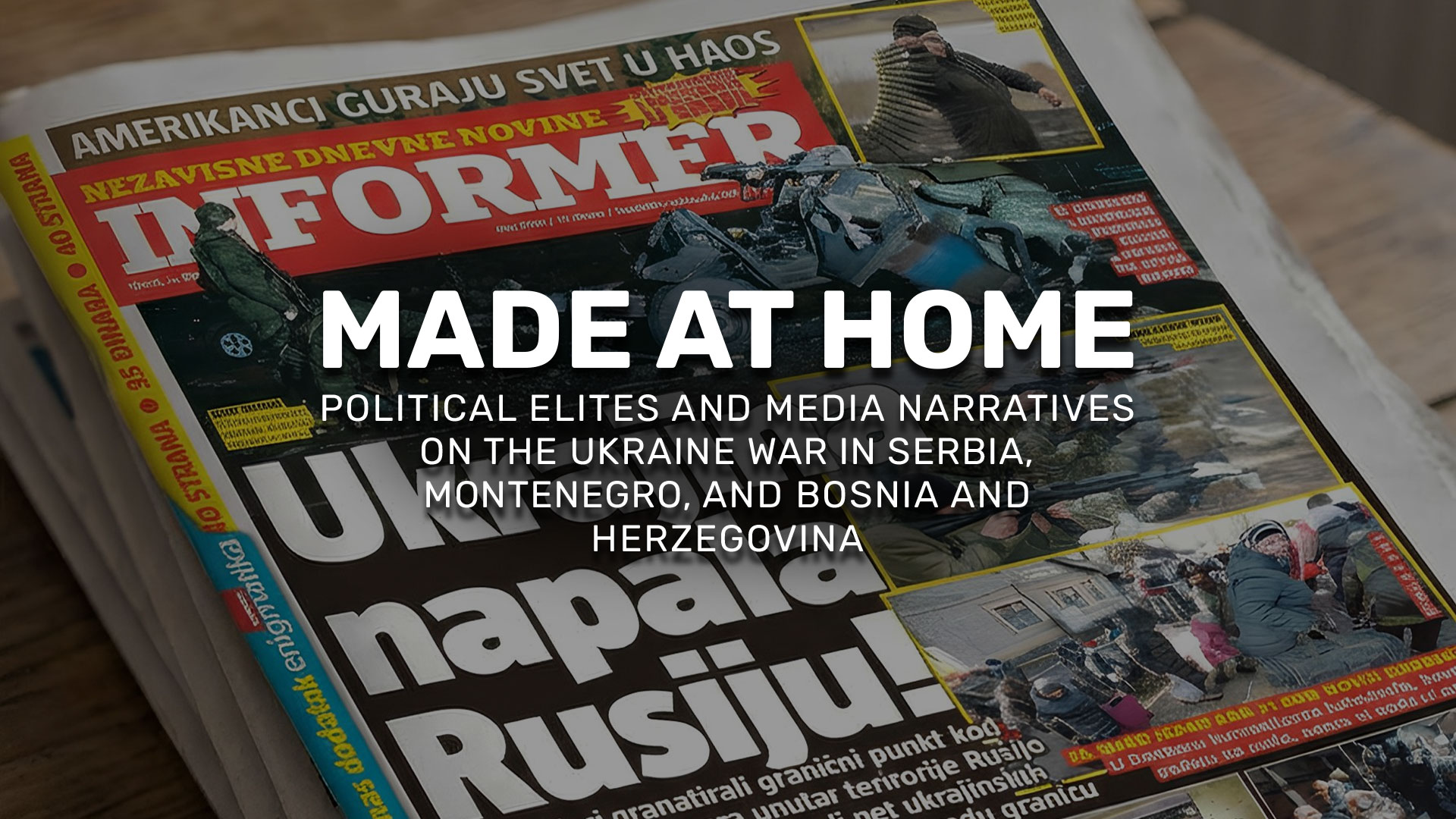
The war in Ukraine has reverberated across the Western Balkans in ways that reflect the region’s own political dynamics more than the influence of any external actor, including Russia. In Serbia, Montenegro, and Bosnia and Herzegovina, media coverage and public narratives surrounding the conflict have been shaped primarily by domestic political realities, local media structures, and long-standing identity divides.

Date: 22.10.2025.
Author: Jelena Pejić Nikić |
This policy paper examines Western Balkan stakeholders' perspectives on what is needed for meaningful enlargement and the EU reforms they consider essential for an effective expanded Union. Field research in spring and summer 2024 included 16 high-level interviews with representatives from all six countries of the region.