RELATED

Date: 14.09.2017.
Author: Saša Đorđević |
More than half of the population in Serbia (56%) showed trust in the police. Over the last three years, a steady yet small increase in the level of trust in the police has been observed. However, it is still below the global average of 60-90%.These are the main findings of a public opinion survey conducted within the framework of the regional network of civil society organizations POINTPULSE.

Date: 21.11.2016.
Author: Predrag Petrović |
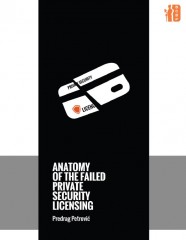
Before the special Law on Private Security was adopted in November 2013, the private security industry had been operating in a legal vacuum for 20 years. The analysis of the implementation of this Law was conducted by the BCSP Executive Director Predrag Petrovic.

Date: 24.05.2016.
Author: Saša Đorđević |
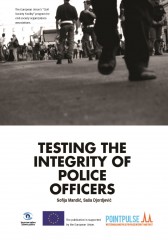
Integrity testing has been the subject of public discussion in Serbia since 2012. The Law on Police, which introduced three preventive anti-corruption measures, including the integrity test, was enacted four years later.

OSCE Code of Conduct on Politico-Military Aspects of Security as stimulus for security sector reform
Date: 11.04.2014.
Author: Belgrade Centre for Security Policy
Promoting cooperation and responsible conduct in the field of defense and security in the member states of the OSCE was the aim of the three-day workshop held in Belgrade to mark 20 years since the adoption of the OSCE Code of Conduct on Politico-Military Aspects of Security (OSCE CoC).

Date: 25.12.2012.
Author: Đorđe Popović |
The changes in the military over the past eight years were strongly influenced by the political turmoil in Serbia, the post-conflict and post-authoritarian context in which the armed forces developed, and the lingering union with Montenegro. As a result it is hardly surprising that the approach of the ruling elites to the reform of the armed forces was driven by everyday political needs and interests.
Date: 25.12.2012.
Author: Miroslav Hadžić |
Over the last eight years (2000-2008) we have seen important and positive changes in the security sector of the Republic of Serbia. Those changes are one of the main products of Serbia’s gradual, sometimes laborious, yet ongoing democratization and liberalisation.

Date: 24.12.2012.
Author: Belgrade Centre for Security Policy
Although during the last two years the state has done a lot to implement the National Action Plan for implementation of UNSC Resolution 1325, little has been done to involve the civil society in this process, the pioneer of engagement in this area – this was one of the conclusions of the first gathering of women peace organizations and state institutions responsible for the implementation of NAP 1325 representatives, initiated by BCSP.

Date: 23.11.2012.
Author: Belgrade Centre for Security Policy
Three out of four Serbian citizens think there has been an increase in violence in the last few years. This percentage is particularly alarming in Belgrade (84%) and among young people (82%). Citizens are most concerned with individual violence: bullying in schools, domestic violence, and the violence associated with drug addiction and crime.