PUBLICATION:
Citizens Perception on Kosovo – Serbia Dialogue and Identity Issues – Kosovo and Serbia Citizens’ Perspective
In the latest report you can find comparative results of the public opinion surveys conducted during September and October 2020 in Serbia and Kosovo. This report focuses on citizens perception on Kosovo - Serbia Dialogue and Identity Issues.
Key findings:
- Majority of citizens of Kosovo and Serbia support the dialogue process; however, they have diametrically opposed perception of the goals of the dialogue. While most Kosovo citizens believe the goal of the dialogue is mutual recognition, in Serbia the goal is perceived to be return of Kosovo to Serbia with wider autonomy;
- Citizens of Kosovo and of Serbia largely share their negative perceptions of the dialogue process, with respect to transparency and its impact. Most citizens of Kosovo and Serbia think that the dialogue lacked transparency and it did not change anything or that they had any personal benefits from the process. This suggests significant shortcoming in communication approaches of the EU and governments of Kosovo and Serbia;
- Citizens of Serbia are less optimistic compared to Kosovo citizens about the future of the relations between the two countries. Majority of the Serbs do not expect to see normalization of relations with Kosovo Albanians regardless of the outcome of the dialogue;
- The citizens’ perception of the Kosovo-Serbia dialogue seems to suggest that they do not view the process to mean normalization between the two societies of the countries, but it is rather seen as normalization between state authorities. Agreements and achievements in the dialogue that are reached in Brussels do not see to be translated in the same way in the society as a whole. In other words, a final agreement between Kosovo and Serbia that would be seen to constitute achievement of normalization, would not signify the same for the citizens in both countries. Therefore, normalization of the relations process should not supplant the clear necessity that these result show for a process of reconciliation and healing between peoples of Serbia and Kosovo.
The Western Balkans Security Barometer consists of a combination of quantitative and qualitative research methods that provide objective and credible results. Its data are collected through face-to-face interviews technique with randomly selected respondents conducted throughout the entire territory of both countries – Kosovo and Serbia. The field research in both countries took place from late September to early October 2020 conducted by the respective field research teams of Kosovar Centre for Security Studies in Kosovo and Sprint agency in Serbia.
The report is jointly written by Kosovar Centre for Security Studies and Belgrade Centre for Security Policy with the financial support of National Endowment for Democracy (NED). Perceptions presented in this report are a summary of information gathered from respondents and it only demonstrates how people perceive the issues interpreted on the report. It is in no way a conclusive assessment of the quality of the work of institutions or issues itself subject to this study. It shall serve as an instrument for addressing potential shortcomings but also an indicator of the effectiveness of their communication with the people.
The views presented in this report are perceptions of the respondents and do not necessarily represent the views of Kosovar Centre for Security Studies and Belgrade Centre for Security Policy. Opinions expressed in this report do not necessarily represent the views of the National Endowment for Democracy (NED).
DETAILS
AUTHORS

SHARE
PDF PREVIEW
RELATED

Date: 21.07.2026.
Author: Dr Srđan Cvijić | Igor Bandović | Marko Drajić | Predrag Petrović |
In November 2025, the Belgrade Centre for Security Policy published the policy brief Political and Institutional Crisis in Serbia: Possible Scenarios. The brief outlined four scenarios and their corresponding outcomes.
Date: 28.05.2026.
Author: Belgrade Centre for Security Policy
As the coordinator of the Working Group for Chapter 24 within the National Convention on the European Union (NCEU), BCSP compiled joint comments from nine NCEU member organizations on the Draft Law on Internal Affairs, which was subject to official public debate in April 2026.
Date: 07.04.2026.
Author: Belgrade Centre for Security Policy
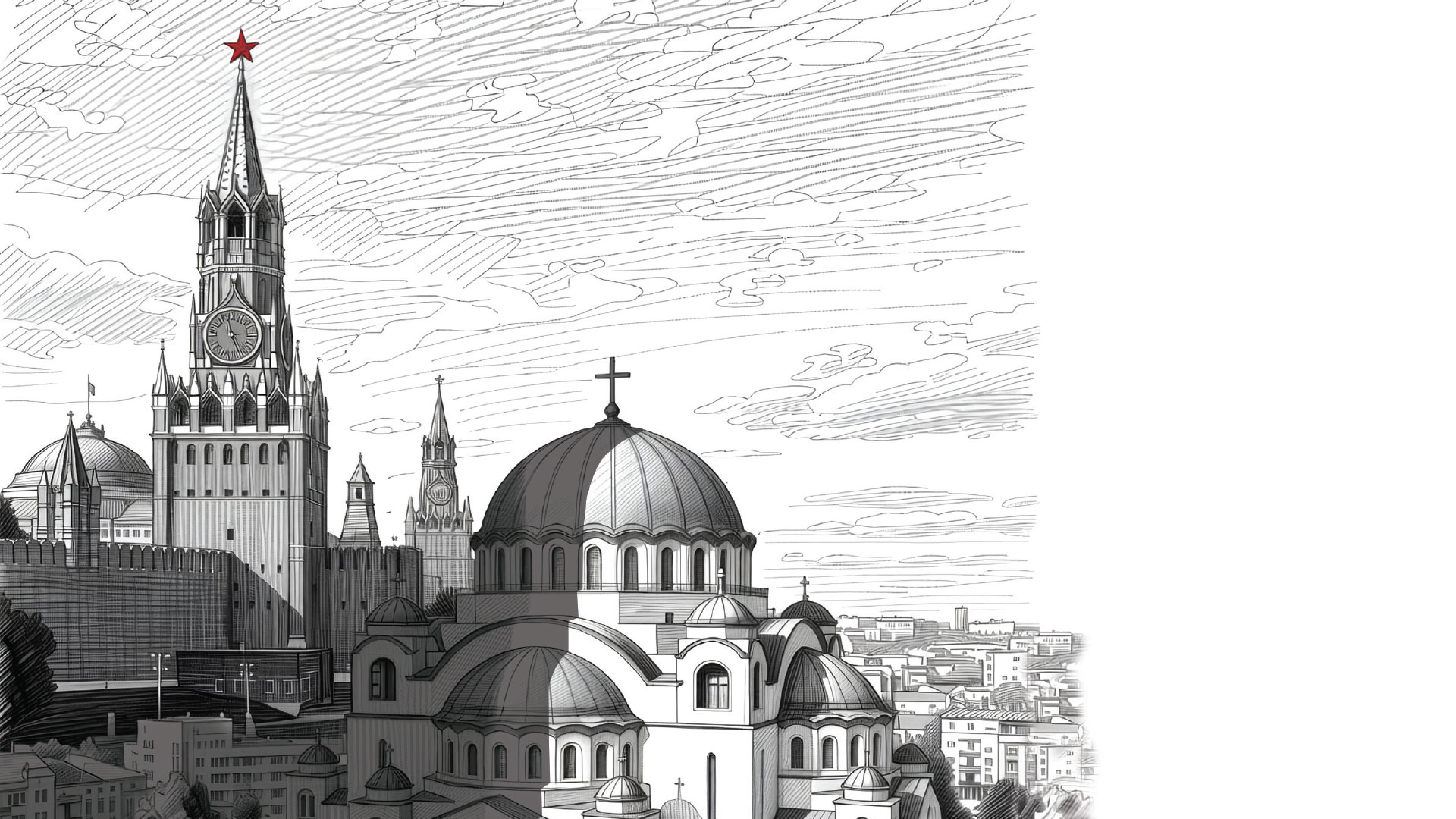
This paper examines how the Serbian Orthodox Church (SOC) is portrayed in existing research and media discourse, primarily as a major conduit of Russian influence in the Western Balkans through narratives tied to the Kremlin’s “Russian World” project and hybrid warfare activities.