PUBLICATION: Analysis
Messy Diplomacy: Western Balkan Countries Facing the Gaza Conflict
The ongoing war that Israel is waging in Gaza against Hamas is one of the most consequential conflicts with serious political implications worldwide. The Gaza conflict has already diverted the world’s attention from what has been the most dominant international conflict in the past year and a half: the Russian invasion of Ukraine.
Many countries in the Western Balkans are conflicted about what diplomatic stance to take on the Gaza war, primarily whether they should support Israel or Palestine or remain neutral since their decision-making will have to balance their domestic public, as well as their ties with Israel, Muslim countries and, most importantly, the US and the EU. The vote taken on October 26 in the UN General Assembly (hereinafter: UNGA) on the resolution that called for a truce between Israel and Hamas with a strong emphasis on humanitarian factors demonstrated how conflicted the Western Balkan countries were on the current conflict in Gaza.
The pattern of division among the Western Balkan countries on this occasion somewhat diverges from the votes cast in different UN fora in the past decade. Whereas Albania and North Macedonia have continued with their previous positions when it comes to their foreign policy toward the conflict in the Middle East, Bosnia and Herzegovina, Montenegro and Serbia have displayed an interesting change.
Skip to PDF content
Tags: Gaza Conflict, Israel, Palestine, the western balkans


PDF PREVIEW
RELATED

Date: 09.02.2026.
Author: Maja Bjeloš |
The concept of the “colour revolution” has shifted from describing democratic uprisings in post-socialist states to serving as a powerful tool of authoritarian control. In Serbia, the ruling elite—drawing heavily on the Russian strategic playbook—has reframed the term as a symbol of foreign subversion aimed at overthrowing the government and destabilising the country. Since 2012, this narrative has been systematically used to delegitimise dissent, protests, and civic mobilisation.
Date: 01.02.2026.
Author: Belgrade Centre for Security Policy
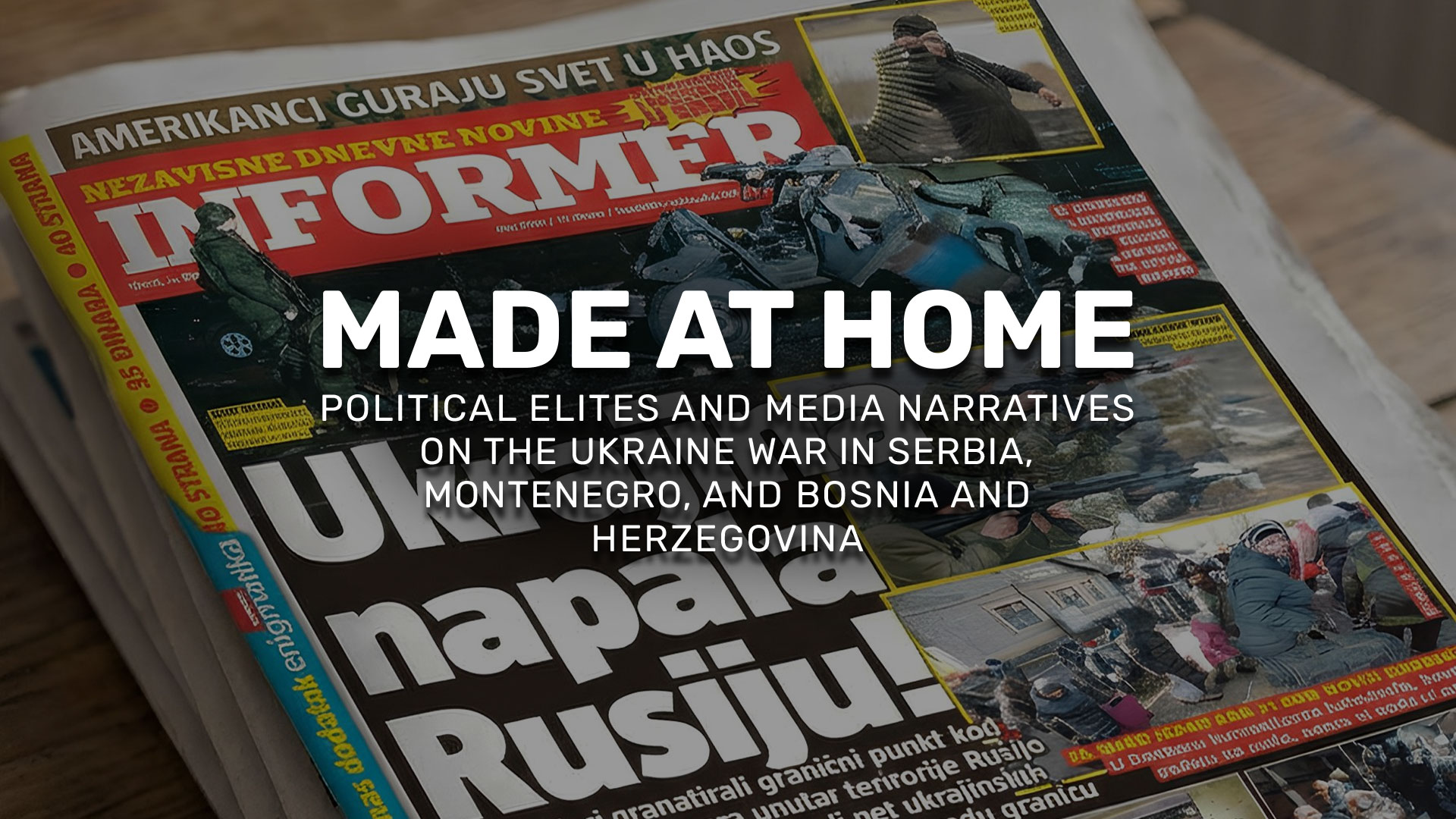
The war in Ukraine has reverberated across the Western Balkans in ways that reflect the region’s own political dynamics more than the influence of any external actor, including Russia. In Serbia, Montenegro, and Bosnia and Herzegovina, media coverage and public narratives surrounding the conflict have been shaped primarily by domestic political realities, local media structures, and long-standing identity divides.

Date: 24.12.2025.
Author: Predrag Petrović |
In the past decade, European countries have witnessed a rise in anti-establishment extremism (AEE), which challenges the modern democratic order and offers authoritarian modes of governance as a “solution” to consecutive, overlapping crises.