PUBLICATION:
Proposals for Police Reform in View of the Upcoming Drafting of the Law on Internal Affairs
How to improve the withdrawn Draft Law on Internal Affairs in order to effectively tackle the chronic problem of politicization of the Serbian police? We provided answers in the new publication of the prEUgovor coalition, which gathers BCSP and other six civil society organisations.
It will soon be exactly 20 years since the OSCE Mission formulated the priorities of police reform in Serbia and Montenegro through the principle of three “Ds”: decentralisation, demilitarisation and depoliticisation. Leaving the first two listed items aside, the objective of this text is to deal with the last one – depoliticisation – in the context of current police reforms conducted as part of the accession negotiations of Serbia and the European Union, in connection with the drafting of the new Law on Internal Affairs, whose adoption is expected by the end of 2022.
Namely, although two decades have passed since, it seems that, out of the three “Ds”, the least progress has been made in the area of depoliticisation, i.e. eradicating the toxic influence of politics on the operational work of the police. This problem is also regularly highlighted by the European Commission in its annual reports for Serbia, considering that it is also one of the interim benchmarks within Chapter 24, which the Government of Serbia committed to fulfil through the Action Plan for this area in 2016.
The current Law on Police was adopted in 2016 and amended twice in 2018; the National Assembly adopted the first amendments and supplements on 22 March 2018 (“Official Gazette of the Republic of Serbia”, no. 24/2018), and the second on 9 November of the same year (“Official Gazette of the Republic of Serbia”, no. 87/2018). Even then, opportunities to solve eternal dilemmas were missed: to fully ensure the autonomy of police work, both as a whole and, for example, in the work of internal auditors in relation to the Law from 2006. There is every chance that another opportunity will be missed this year too, when, after the unsuccessful attempt of 2021, it is expected that the new Law on Internal Affairs will be passed.
Namely, at the end of August 2021, quite unexpectedly, the Draft Law on Internal Affairs appeared on the website of the Ministry of Internal Affairs. It has since been removed. A public debate was organised within the minimum period of 20 days provided by law, without adequate notification of the interested public, indicating that the creators of the Draft Law did not really want to have an expert debate about it. Just a few days before the expiry of the deadline for the public debate, a large number of relevant civil society organisations expressed their concern, both in relation to the way in which the debate was (not) conducted and the content of the Draft Law itself, and requested that the document be withdrawn from procedure.
Instead of the report on the public debate conducted after the deadline, the Ministry of Interior published a statement (which was also later withdrawn from its website) in which it announced that the disputed Draft Law was withdrawn from procedure at the request of the President of Serbia. As can be seen from parts of the announcement, the organisations that raised their voices against the Draft Law were accused of causing the unfortunate situation.
The text analyses key aspects of the withdrawn Draft Law, and the solutions contained in the current Law on Police, all with a view of ensuring the operational autonomy of the police in accordance with the above-mentioned framework which contains standards that ought to be ensured. Since the Working Group continued to work on the new version of the Draft Law, which has yet to be published, the text will not analyse the details of the provisions, but will rather define the general direction in which changes to the legal framework should proceed.
Read the full publication here:
https://www.preugovor.org/Amendments/1761/Proposals-for-Police-Reform-in-View-of-the.shtml
PDF PREVIEW
RELATED
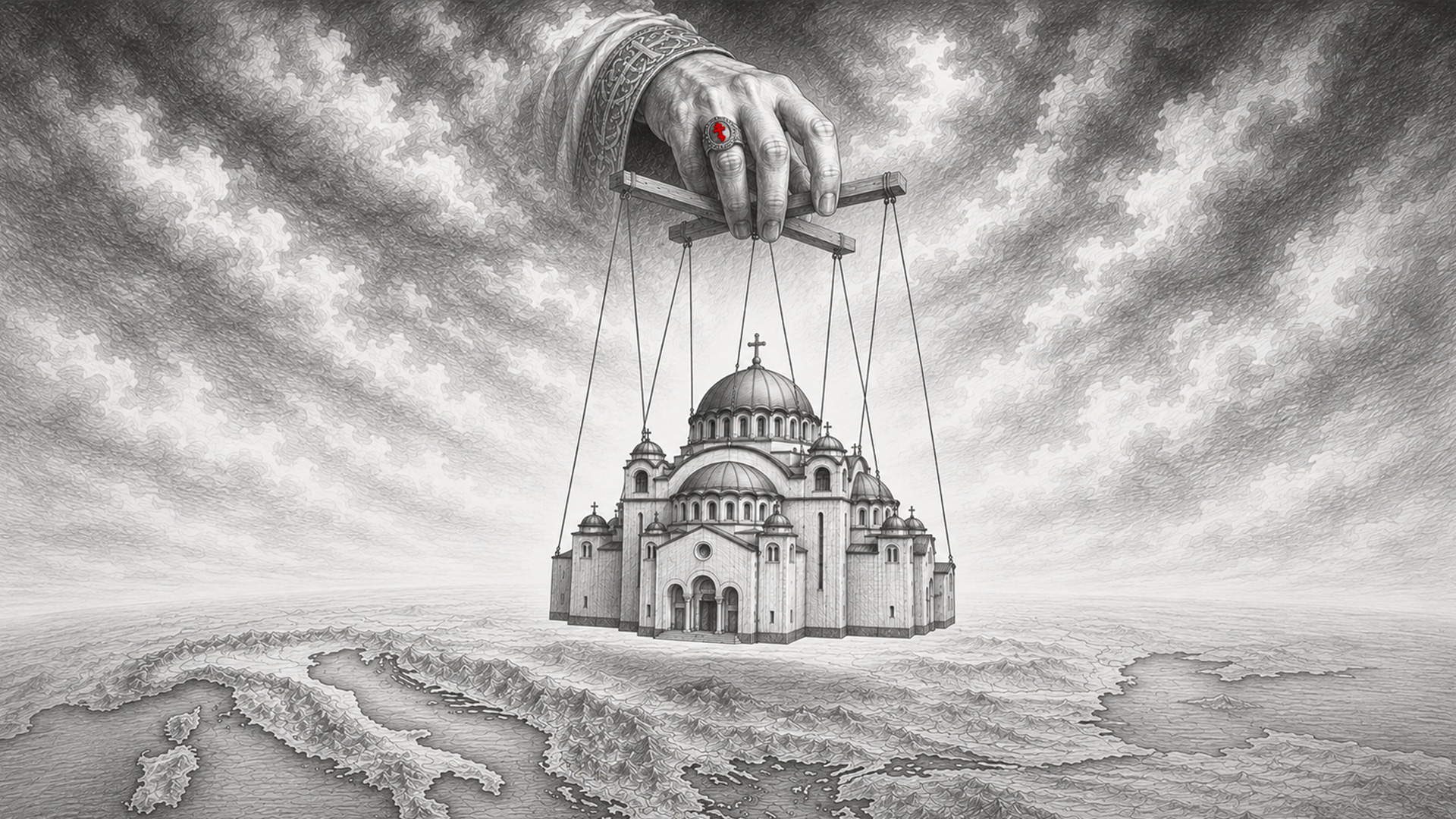
Date: 06.08.2026.
Author: Belgrade Centre for Security Policy
An analysis of cultural wars, anti-scientific narratives and student protests

Date: 21.07.2026.
Author: Dr Srđan Cvijić | Igor Bandović | Marko Drajić | Predrag Petrović |
In November 2025, the Belgrade Centre for Security Policy published the policy brief Political and Institutional Crisis in Serbia: Possible Scenarios. The brief outlined four scenarios and their corresponding outcomes.
New Extremist Trends in Serbia: Anti-System Extremism, Extremist Telegram Channels and Eco-Extremism
Date: 30.06.2026.
Author: Gorana Pebić | Isidora Stakić | Miloš Jovanović |
This report analyses recent and so far insufficiently explored forms of extremism in Serbia, with a particular focus on anti-system extremism, the role of the Telegram digital platform and the instrumentalisation of environmental issues.