PUBLICATIONS
Datum: 04.08.2014.
Autor: Beogradski centar za bezbednosnu politiku
PUBLICATIONS

Datum: 25.04.2014.
Autor: Maja Bjeloš | Bojan Elek |
BCSP researchers Maja Bjelos and Bojan Elek in this paper analyse the implementation of the Agreement reached in Brussels in April 2013, focusing on the key part of the Agreement which explicitly stated that local Serbian Ministry of Internal Affairs (MUP) units would be disbanded and integrated into the Kosovo Police (KP).

Datum: 12.03.2014.
Autor: Maja Bjeloš |
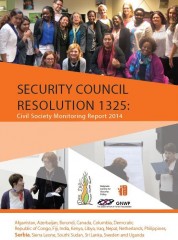
BCSP Researcher Maja Bjelos is co-author of the independent report on achievements in the implementation of UNSCR 1325 on Women, Peace and Security in Serbia in 2014. Analysis of the results was based on 11 indicators, with a focus on the assessment of women's participation, prevention and protection from violence and the promotion of gender perspective. The authors have offered specific recommendations to institutions, the United Nations and civil society organizations.

Datum: 27.02.2014.
Autor: Aurelija Djan | Saša Đorđević |
Psychological support for police officers, fight against organised crime, and human rights and police are topics analyzed by authors in ninth edition of the Collection. This publication is published by Belgrade Centre for Security Policy (BCSP), Belgrade Centre for Human Rights (BCHR) and Centre for Development Policy and Co-operation (CDPC), with the support of the OSCE Mission to Serbia.

Datum: 26.02.2014.
Autor: Katarina Đokić | Marko Milošević |
BCSP researchers Katarina Djokic and Marko Milosevic analyze the latest provisions to modify and supplement the Law on Defence and the Law on the Serbian Armed Forces.

Datum: 27.12.2013.
Autor: Maja Bjeloš |
The aim of the report is to present the greatest achievements in the process of NAP implementation for the period July 2012 - 2013, to point out the challenges faced within this process, and to suggest the measures to overcome these challenges and advance the implementation of the NAP.

Datum: 07.12.2013.
Autor: Saša Đorđević |
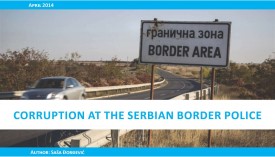
The authors of eight Collection propose recommendations for improvement of the fight against corruption in the police, the realization of the concept of community policing and upgrading the role of the police in the exercise of and respect for the rights of vulnerable groups. This series is published with the support of the OSCE Mission to Serbia.

Datum: 04.11.2013.
Autor: Predrag Petrović | Saša Đorđević | Marko Savković |
This is the first study of public opinion in realization of civil society organization where the focus is on the perception of corruption in the police, citizens' personal experiences with corruption in the police and evaluation of the reforms of the police in this area.

Datum: 30.10.2013.
Autor: Belgrade Centre for Security Policy |
Belgrade Centre for Security Policy (BCSP) in cooperation with Kosovar Centre for Security Studies (KCSS) and Institute for Democracy and Mediation (IDM) presents the latest public opinion research findings on the Brussels dialogue, the future of relations within the Belgrade-Pristina-Tirana triangle, and human security in each community.