PUBLICATION: Analysis
Municipal Elections in Northern Kosovo: Towards a New Balance?
This paper aims to assist all stakeholders to the Brussels Agreement to work effectively toward a positive outcome in northern Kosovo, but also to prepare for contingencies.
Municipal elections in Kosovo on 3rd November will be a litmus test for the Brussels Agreement and for the normalisation of relations between Serbia and Kosovo, but also an omen for the EU’s ability to impose stability in its backyard, the authors agree.
The paper looks at the challenges ahead and analyses the latest developments among the north Kosovo Serb political elite and the roles played by Belgrade and Prishtina. It ends with a consideration of scenarios for the elections and their aftermath. On the basis of their analysis, the authors have developed four distinct scenarios: optimistic, realistic, pessimistic and disastrous. The scenario planning is intended to serve as a basis for all the stakeholders to work more effectively toward their most desired outcomes, but also to cooperate to avoid the more calamitous scenarios. The authors warned that scenarios should not be seen as a forecast, but rather as an analytical exercise.
Municipal Elections in Northern Kosovo were the subject of the paper which was published by BCSP, Democracy for Development Institute(D4D) in Prishtina and the Central European Policy Institute(CEPI). It was co-authored by Filip Ejdus, member of the BCSP Executive Board and Assistant Professor at the Faculty of Political Sciences/University of Belgrade, Leon Malazogu, Director of the Democracy for Development Institute in Prishtina and Milan Nic, Head of Balkan Program at CEPI.
This paper is the first in a series of research papers published within the project “Visegrad Support for Dialogue between Serbia and Kosovo”, and is supported by the International Visegrad Fund.
DETAILS
AUTHORS

SHARE
PDF PREVIEW
RELATED

Date: 21.07.2026.
Author: Dr Srđan Cvijić | Igor Bandović | Marko Drajić | Predrag Petrović |
In November 2025, the Belgrade Centre for Security Policy published the policy brief Political and Institutional Crisis in Serbia: Possible Scenarios. The brief outlined four scenarios and their corresponding outcomes.
Date: 28.05.2026.
Author: Belgrade Centre for Security Policy
As the coordinator of the Working Group for Chapter 24 within the National Convention on the European Union (NCEU), BCSP compiled joint comments from nine NCEU member organizations on the Draft Law on Internal Affairs, which was subject to official public debate in April 2026.
Date: 07.04.2026.
Author: Belgrade Centre for Security Policy
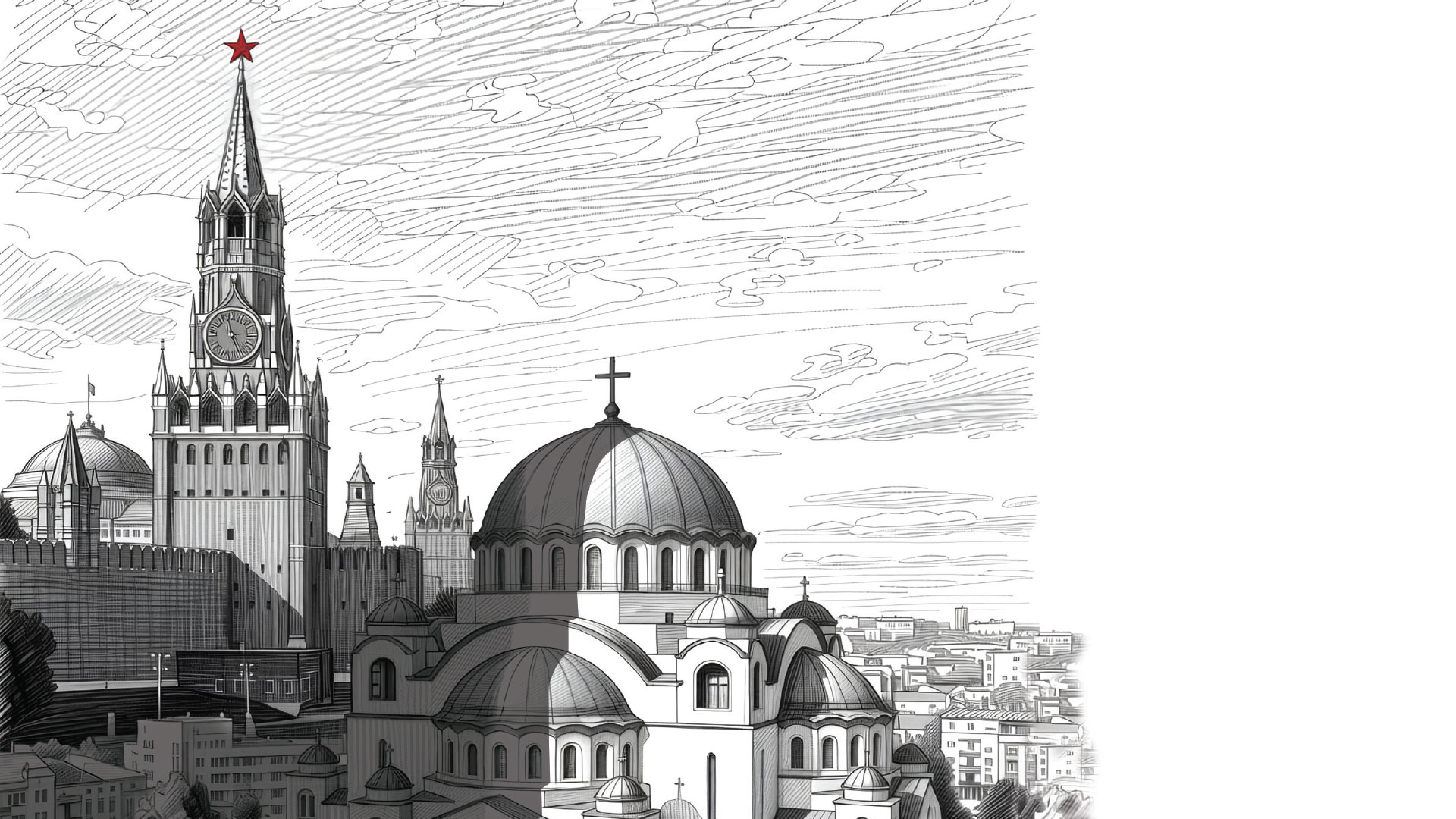
This paper examines how the Serbian Orthodox Church (SOC) is portrayed in existing research and media discourse, primarily as a major conduit of Russian influence in the Western Balkans through narratives tied to the Kremlin’s “Russian World” project and hybrid warfare activities.