RELATED

Date: 09.02.2026.
Author: Maja Bjeloš |
The concept of the “colour revolution” has shifted from describing democratic uprisings in post-socialist states to serving as a powerful tool of authoritarian control. In Serbia, the ruling elite—drawing heavily on the Russian strategic playbook—has reframed the term as a symbol of foreign subversion aimed at overthrowing the government and destabilising the country. Since 2012, this narrative has been systematically used to delegitimise dissent, protests, and civic mobilisation.
Date: 01.02.2026.
Author: Belgrade Centre for Security Policy
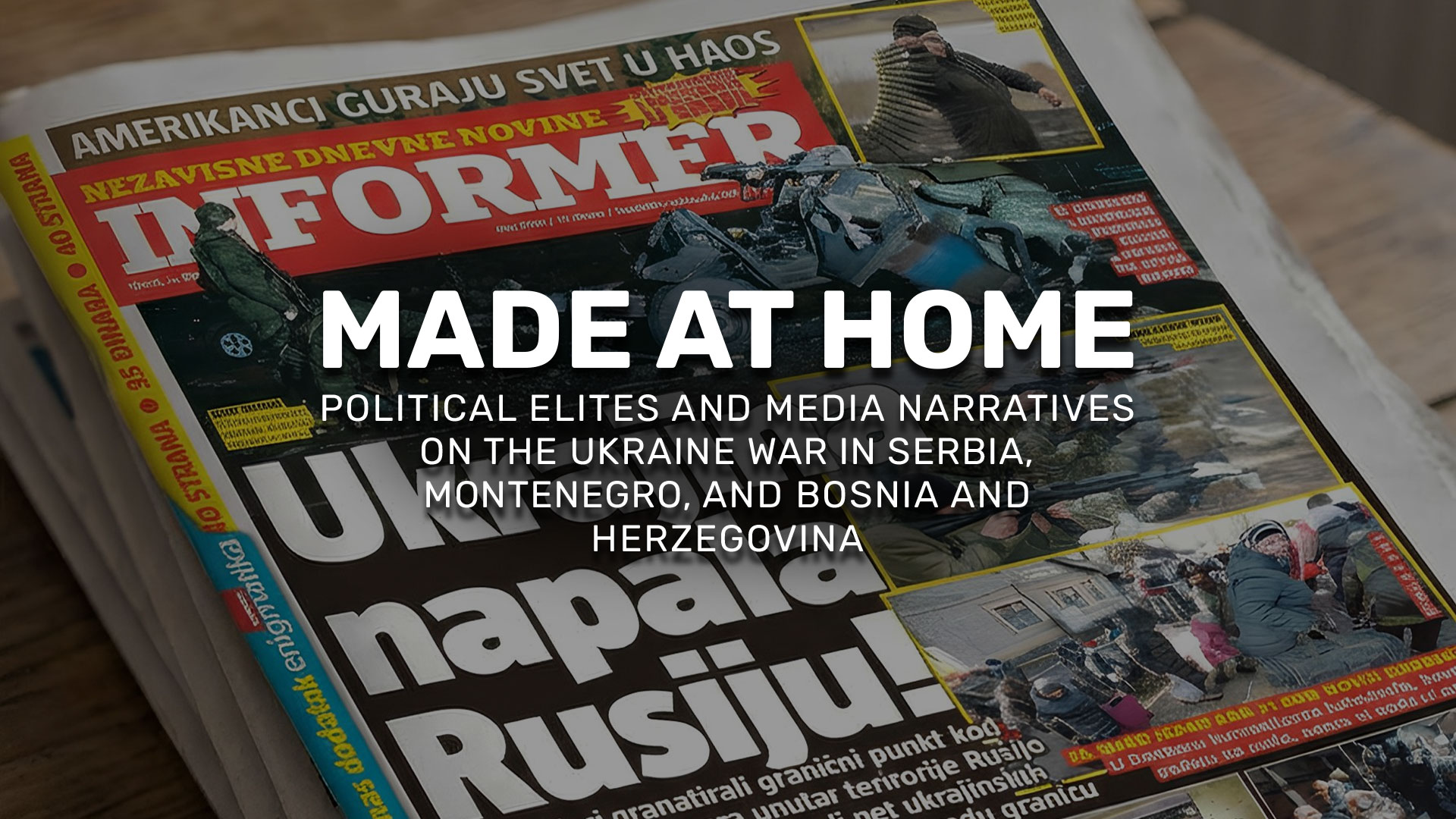
The war in Ukraine has reverberated across the Western Balkans in ways that reflect the region’s own political dynamics more than the influence of any external actor, including Russia. In Serbia, Montenegro, and Bosnia and Herzegovina, media coverage and public narratives surrounding the conflict have been shaped primarily by domestic political realities, local media structures, and long-standing identity divides.

Date: 24.12.2025.
Author: Predrag Petrović |
In the past decade, European countries have witnessed a rise in anti-establishment extremism (AEE), which challenges the modern democratic order and offers authoritarian modes of governance as a “solution” to consecutive, overlapping crises.

Date: 26.03.2025.
Author: Isidora Stakić |
Human rights defenders are people who act, individually or jointly, to advance human rights and fundamental freedoms and fight for their protection at the local, national and international levels.