DETAILS
AUTHORS

SHARE
PDF PREVIEW
RELATED

Date: 21.07.2026.
Author: Dr Srđan Cvijić | Igor Bandović | Marko Drajić | Predrag Petrović |
In November 2025, the Belgrade Centre for Security Policy published the policy brief Political and Institutional Crisis in Serbia: Possible Scenarios. The brief outlined four scenarios and their corresponding outcomes.
Date: 28.05.2026.
Author: Belgrade Centre for Security Policy
As the coordinator of the Working Group for Chapter 24 within the National Convention on the European Union (NCEU), BCSP compiled joint comments from nine NCEU member organizations on the Draft Law on Internal Affairs, which was subject to official public debate in April 2026.
Date: 07.04.2026.
Author: Belgrade Centre for Security Policy
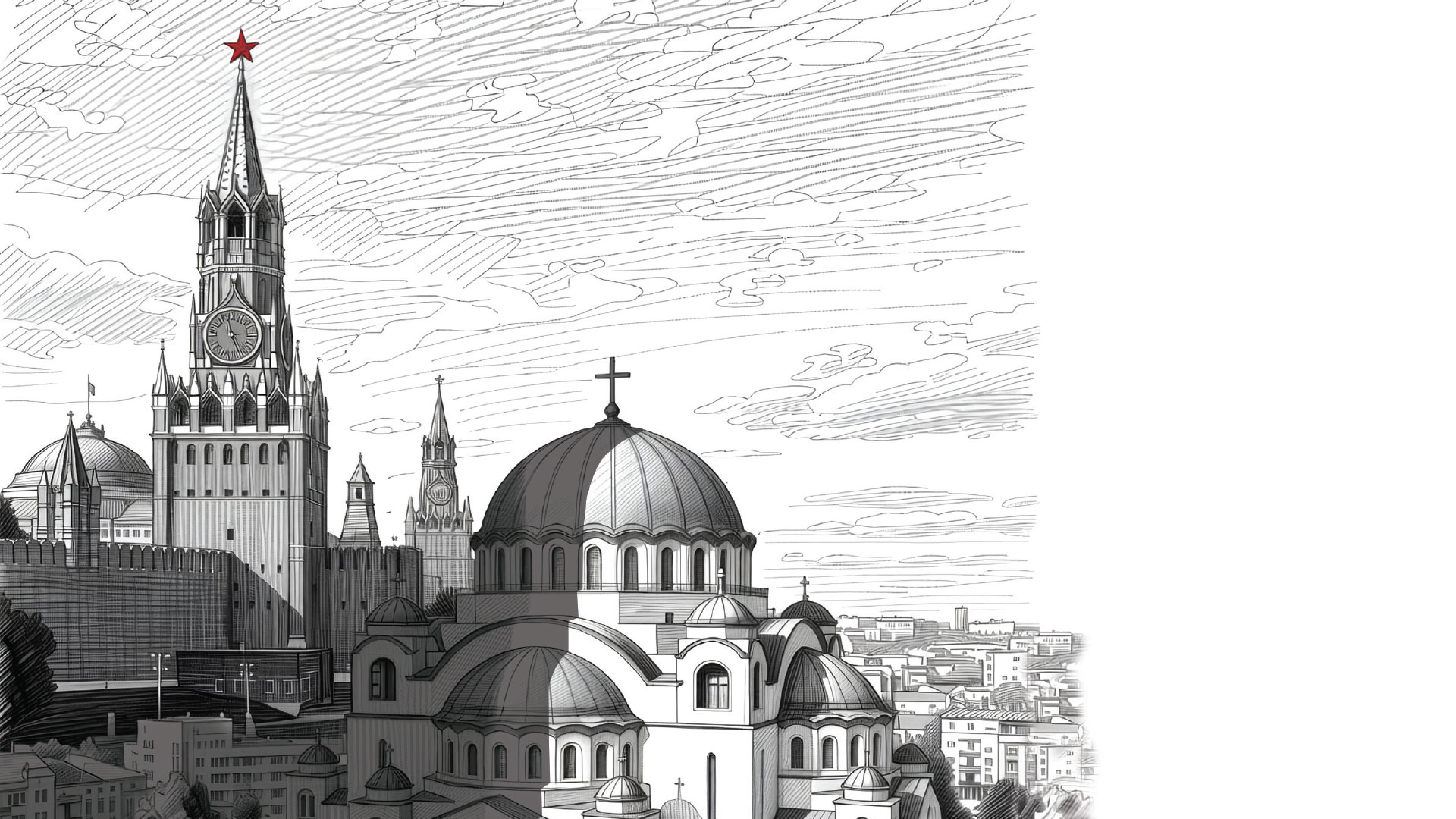
This paper examines how the Serbian Orthodox Church (SOC) is portrayed in existing research and media discourse, primarily as a major conduit of Russian influence in the Western Balkans through narratives tied to the Kremlin’s “Russian World” project and hybrid warfare activities.