PUBLICATION: Analysis
Police Cooperation Between Kosovo and Serbia
This policy brief intends to shed some light on how police cooperation is conducted between Kosovo and Serbia.
The author presents in general and deconstructs the institutional architecture in Kosovo that enables the current mode of cooperation.
Second, it examines the mode of both formal and informal, and direct and indirect police cooperation between Kosovo and Serbia.
Third, it outlines the existing challenges of the current institutional set-up and mode of cooperation in policing matters, followed by some recommendations.
Political disagreements between Kosovo and Serbia mean substantial lapses in proper management and control of their mutual border, especially in the sensitive northern part of Kosovo.
This opens the door to widespread smuggling of migrants, who then find their way to Hungary and then Switzerland and elsewhere in Europe.
Moreover, the lack of joint and frequent border patrols between Kosovo and Serbia opens the door to massive tree felling in the forests, especially in the northern part of Kosovo.
Should the current trend continue, the area might soon be deforested, causing collateral damage for both Kosovo and Serbia
This publication was produced in the framework of the project Security Research Forum: Belgrade-Prishtina-Tirana supported by the Government of the Kingdom of Norway. Research was supported by the Balkans Trust for Democracy’s Professional Work Exchange Program for Enhanced Policy Dialogue, with the support of the Foreign and Commonwealth Office of the United Kingdom. The views and analysis contained in this publication are those of the authors and do not necessarily represent the views of the Norwegian and UK governments or any of their affiliated organizations.
Tags: ..., and serbia, between kosovo, brief, conducted, cooperation, current, intends, kosovo, kosovo and, light, police, policy, serbia, the currentpolice
DETAILS
AUTHORS

SHARE
PDF PREVIEW
RELATED

Date: 21.07.2026.
Author: Dr Srđan Cvijić | Igor Bandović | Marko Drajić | Predrag Petrović |
In November 2025, the Belgrade Centre for Security Policy published the policy brief Political and Institutional Crisis in Serbia: Possible Scenarios. The brief outlined four scenarios and their corresponding outcomes.
Date: 28.05.2026.
Author: Belgrade Centre for Security Policy
As the coordinator of the Working Group for Chapter 24 within the National Convention on the European Union (NCEU), BCSP compiled joint comments from nine NCEU member organizations on the Draft Law on Internal Affairs, which was subject to official public debate in April 2026.
Date: 07.04.2026.
Author: Belgrade Centre for Security Policy
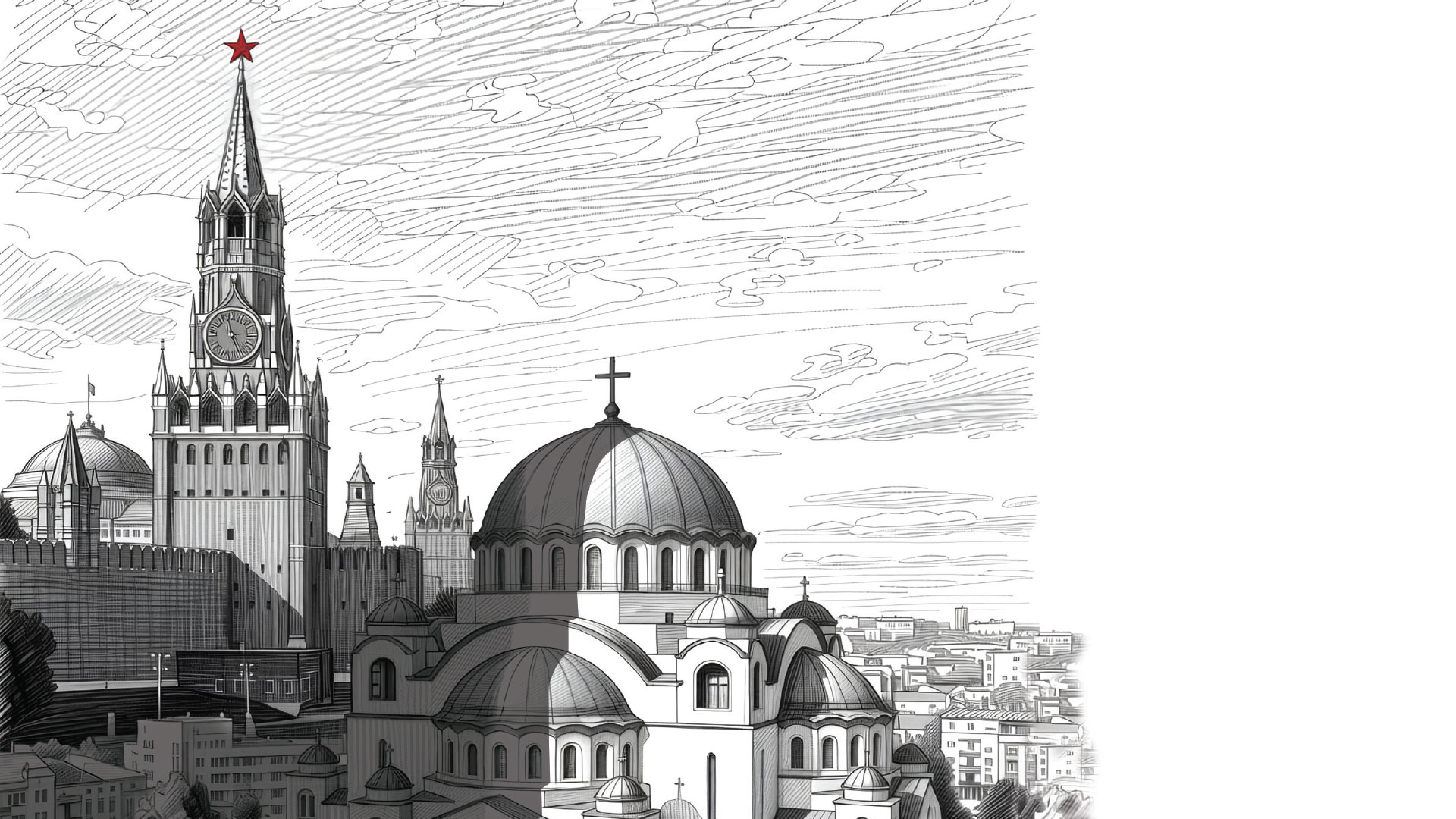
This paper examines how the Serbian Orthodox Church (SOC) is portrayed in existing research and media discourse, primarily as a major conduit of Russian influence in the Western Balkans through narratives tied to the Kremlin’s “Russian World” project and hybrid warfare activities.