PUBLICATION: Analysis
War Echoes Intensify Fears – Views of Serbian Citizens on Relations in the Region
The study analyses Serbian citizens' views on three main topics – the possibility of outbreak of conflict in the Balkans, Serbia's bilateral relations with its neighbours, as well as the key benefits and opportunities of regional cooperation and initiatives.
The citizens of Serbia are aware of the insecurity caused by geopolitical competition and conflicts in Europe. The war in Ukraine, which has been going on for a year now, has fuelled fears that it could spill over into the Balkans and lead to an open conflict in the region, primarily in Kosovo and Bosnia and Herzegovina. This is why the international and domestic attention has recently been focused on the tensions between Belgrade and Pristina, which, due to the lack of inclusive and functional dialogue, have led to localised riots and violent incidents. In the last few months, the media was informing the public about the erection of barricades in the north of Kosovo, and about the intervention of the special police forces of Kosovo and the resistance of the Serbian community to the introduction of Kosovo vehicle licence plates.
In Bosnia and Herzegovina, the political leaders of all three constituent peoples brought inter-ethnic tensions to a boil in order to gain political points for their parties before the elections. The political situation in Montenegro has been unstable since the fall of the DPS regime in the 2020 election. Since then, two governments have lost the majority support in the Parliament, while ethnic tensions have further deepened because of the agreement signed between the Montenegrin government and the Serbian Orthodox Church. Political tensions in North Macedonia have escalated in light of the French proposal for overcoming the issue of the Bulgaria’s veto on North Macedonia’s EU integration process and threaten to further destabilise current government and the situation in the country and provide space for the return of the previous regime.
The data presented in the report derive from the Western Balkans Security Barometer (WBSB) survey. WBSB is a new regional project launched by KCSS, and implemented in cooperation with the Belgrade Centre for Security Policy (BCSP) in Serbia and Center for the Study of Democracy and Governance (CSDG) in Albania, supported by the National Endowment for Democracy (NED). WBSB serves as an instrument to measure public perceptions in Albania, Kosovo and Serbia on different security-related issues. The findings demonstrate how citizens percept or are informed about the issues presented in this report. As such, the views presented in this report do not necessarily represent the views of the KCSS, BCSP, CSDG or NED.
Skip to PDF content
Tags:



PDF PREVIEW
RELATED
Date: 06.08.2026.
Author: Belgrade Centre for Security Policy
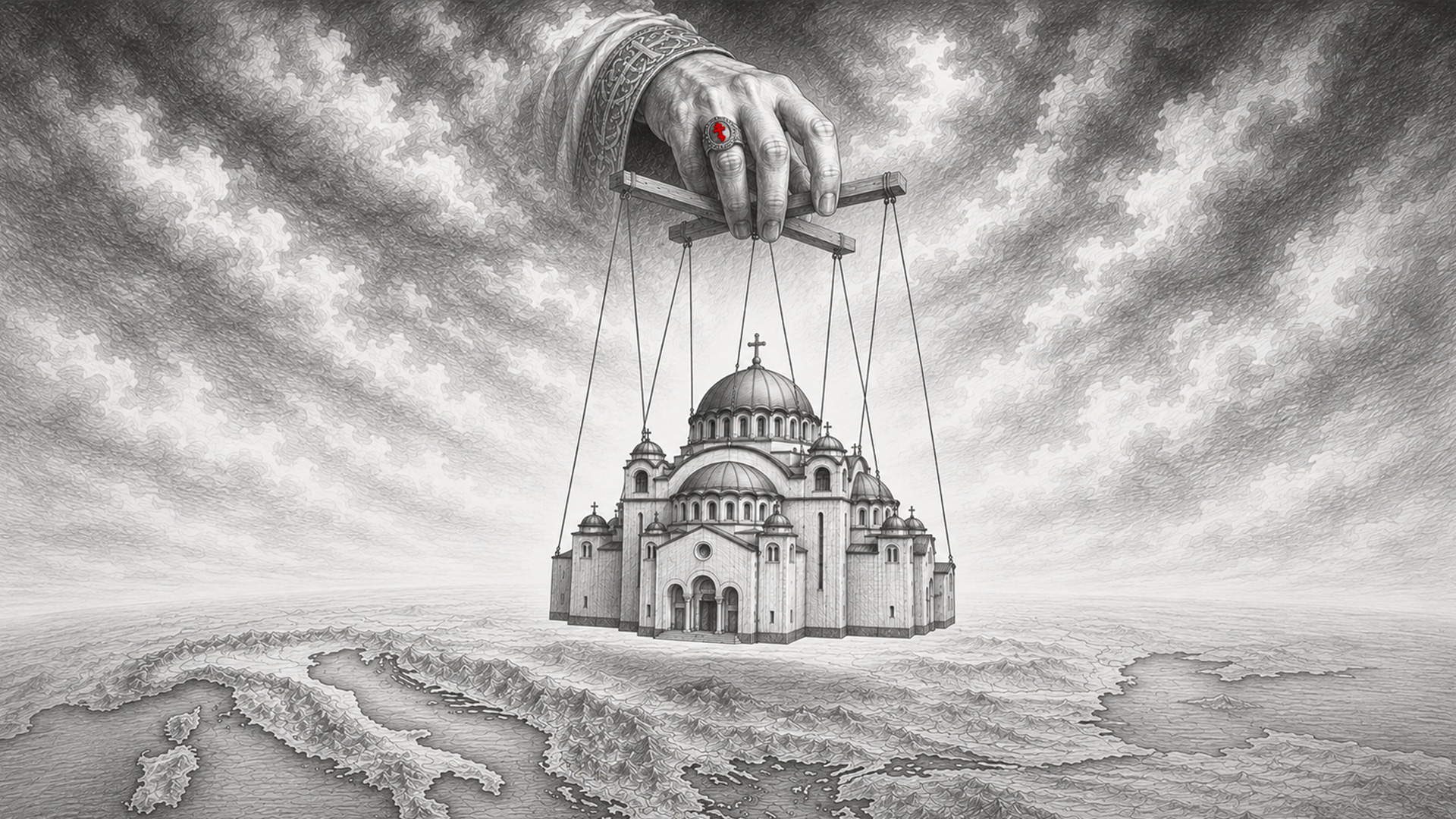
An analysis of cultural wars, anti-scientific narratives and student protests

Date: 21.07.2026.
Author: Dr Srđan Cvijić | Igor Bandović | Marko Drajić | Predrag Petrović |
In November 2025, the Belgrade Centre for Security Policy published the policy brief Political and Institutional Crisis in Serbia: Possible Scenarios. The brief outlined four scenarios and their corresponding outcomes.
New Extremist Trends in Serbia: Anti-System Extremism, Extremist Telegram Channels and Eco-Extremism
Date: 30.06.2026.
Author: Gorana Pebić | Isidora Stakić | Miloš Jovanović |
This report analyses recent and so far insufficiently explored forms of extremism in Serbia, with a particular focus on anti-system extremism, the role of the Telegram digital platform and the instrumentalisation of environmental issues.