PUBLICATION: Study
MANUFACTURED THREAT: The Use of the “Colour Revolution” Narrative as a Tool of Authoritarian Rule in Serbia
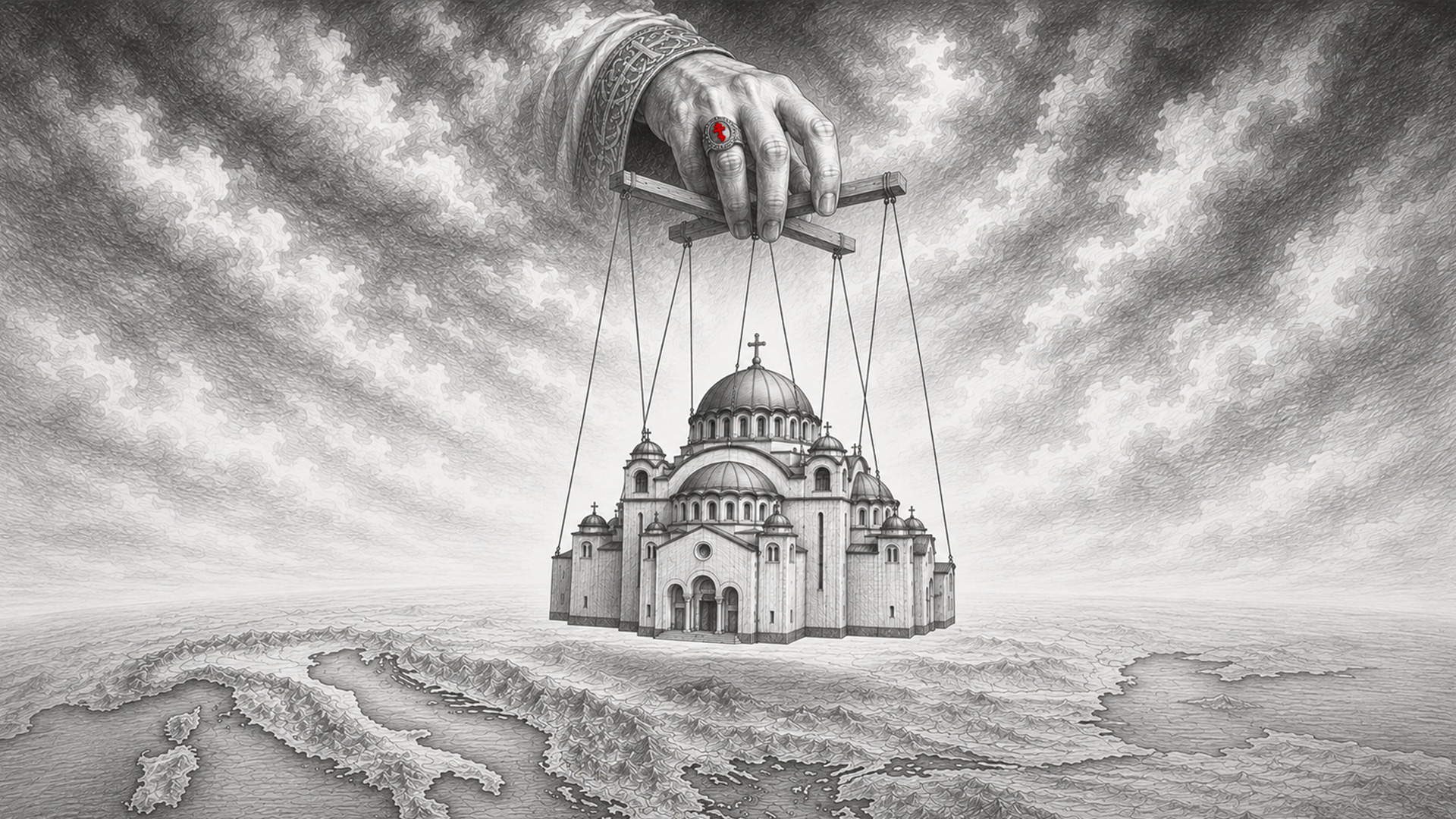
The concept of the “colour revolution” has shifted from describing democratic uprisings in post-socialist states to serving as a powerful tool of authoritarian control. In Serbia, the ruling elite—drawing heavily on the Russian strategic playbook—has reframed the term as a symbol of foreign subversion aimed at overthrowing the government and destabilising the country. Since 2012, this narrative has been systematically used to delegitimise dissent, protests, and civic mobilisation.
Successive waves of protest—over environmental damage, political violence, corruption, or major projects such as the Belgrade Waterfront—have been portrayed as foreign-orchestrated “colour revolutions.” By labelling domestic grievances as externally instigated, the regime shifts responsibility for internal failures onto outside actors, while justifying legal and repressive measures against activists and protesters. This framing intensified after the 2024 Novi Sad railway station tragedy, which triggered nationwide student-led protests and a new cycle of repression.
The colour revolution narrative in Serbia functions less as a reflection of genuine belief and more as a strategic instrument of power. Reinforced through a pro-government media ecosystem and institutional cooperation with Russia, it criminalises dissent, fuels political apathy, and deepens social polarisation. Although public support for protests—especially among youth—reveals growing resistance to this framing, the regime’s dominance over information and narrative construction remains a major obstacle to democratic change.
Skip to PDF contentDETAILS
DATE: 09.02.2026
TOPICS: BSCP, Foreign Influence, Foreign Policy
TYPE: Study
DOI Number: <a href="" target="blank">
AUTHORS

SHARE
PDF PREVIEW
RELATED
Datum: 06.08.2026.
Autor: Beogradski centar za bezbednosnu politiku
The concept of the “colour revolution” has shifted from describing democratic uprisings in post-socialist states to serving as a powerful tool of authoritarian control. In Serbia, the ruling elite—drawing heavily on the Russian strategic playbook—has reframed the term as a symbol of foreign subversion aimed at overthrowing the government and destabilising the country. Since 2012, this narrative has been systematically used to delegitimise dissent, protests, and civic mobilisation.

Datum: 21.07.2026.
Autor: Beogradski centar za bezbednosnu politiku
In November 2025, the Belgrade Centre for Security Policy published the policy brief Political and Institutional Crisis in Serbia: Possible Scenarios. The brief outlined four scenarios and their corresponding outcomes.
New Extremist Trends in Serbia: Anti-System Extremism, Extremist Telegram Channels and Eco-Extremism
Datum: 30.06.2026.
Autor: Beogradski centar za bezbednosnu politiku
This report analyses recent and so far insufficiently explored forms of extremism in Serbia, with a particular focus on anti-system extremism, the role of the Telegram digital platform and the instrumentalisation of environmental issues.