PUBLICATION: Research report
Friends or Foes? External Actors and the EU’s Western Balkans Policy
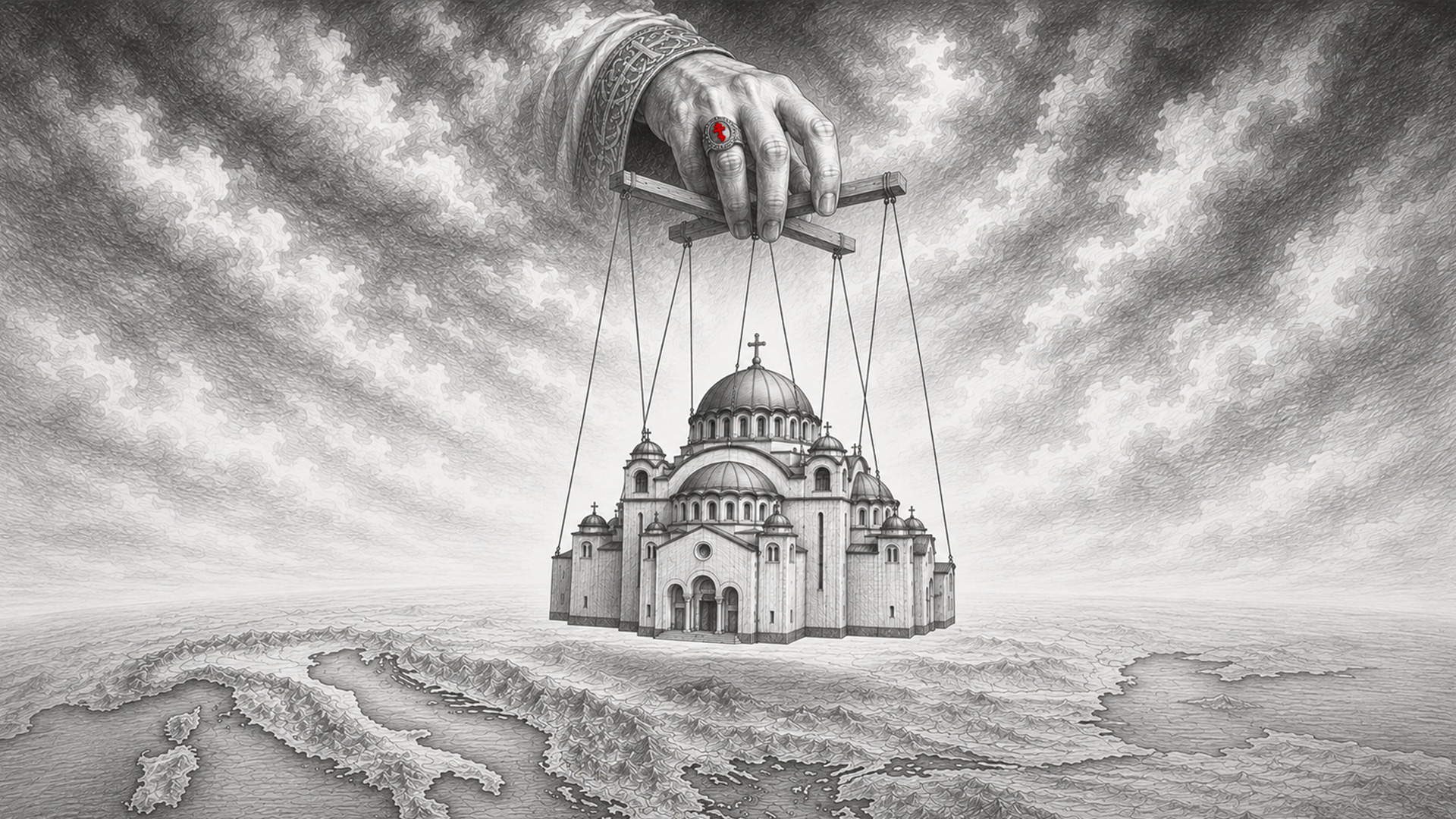
This publication assesses how six external actors - Russia, China, Türkiye, the United Arab Emirates (UAE), Israel, and Azerbaijan - engage with the Western Balkans (WB) and how such engagement affects the European Union (EU) enlargement process.
The analysis is anchored in: (1) Desk research on foreign influence and security dynamics in the WB; (2) 27 structured expert interviews conducted in November–December 2025 using a standard questionnaire; and (3) targeted open-source research to verify interview claims and fine-tune the empirical findings where necessary.
The main output of the research is the Threatometer: three comparable tables rating each actor across three criteria: (i) the prominence of the EU in that actor’s policy vis-à-vis the WB; (ii) the degree to which the actor poses a threat to the European Project; and (iii) the degree of overlap between that actor’s policy and the EU’s agenda in the WB.
Skip to PDF contentDETAILS
DATE: 24.03.2026
TOPICS: BSCP, EU, Foreign Influence, Foreign Policy
TYPE: Research report
DOI Number: <a href="https://doi.org/10.55042/SOQO9919" target="blank">https://doi.org/10.55042/SOQO9919
AUTHORS

SHARE
PDF PREVIEW
RELATED
Datum: 06.08.2026.
Autor: Beogradski centar za bezbednosnu politiku
This publication assesses how six external actors - Russia, China, Türkiye, the United Arab Emirates (UAE), Israel, and Azerbaijan - engage with the Western Balkans (WB) and how such engagement affects the European Union (EU) enlargement process.

Datum: 21.07.2026.
Autor: Beogradski centar za bezbednosnu politiku
In November 2025, the Belgrade Centre for Security Policy published the policy brief Political and Institutional Crisis in Serbia: Possible Scenarios. The brief outlined four scenarios and their corresponding outcomes.
New Extremist Trends in Serbia: Anti-System Extremism, Extremist Telegram Channels and Eco-Extremism
Datum: 30.06.2026.
Autor: Beogradski centar za bezbednosnu politiku
This report analyses recent and so far insufficiently explored forms of extremism in Serbia, with a particular focus on anti-system extremism, the role of the Telegram digital platform and the instrumentalisation of environmental issues.