PUBLICATION: Analysis
Serbia – Between the Hammer and the Anvil: An Overview of the Security of Supply in South-Eastern Europe
With Gazprom pulling out of Ukraine’s transit network of natural gas in 2019, South – Eastern Europe, a region with high import dependency on Russian gas, must prepare itself for a post- 2019 environment that could challenge the stability of the countries’ security of supply. This is particularly the case for Serbia which imports over 80% of its natural gas from Russia.
This article demonstrates that two factors are undermining Serbia’s security of supply and will have potential future repercussions. Firstly, a low level of interconnectivity with its neighbours, a common characteristic amongst the countries in the region. Secondly, dependency on a single supplier and lack of alternative sources for the supply of natural gas.
There are several reasons as to why a high level of regional interconnectivity and multiple suppliers strengthens security of supply. Diversification of supply grants the importer the choice in terms of price advantage and avoids dependency on a single source. A high degree of regional interconnectivity allows the respective country to alternate between sources relatively quickly in times of disruption or cut-offs.
To achieve any positive outcome Serbia has several options available that can influence both factors. The author argues that the development of various energy projects in the wider region coupled with support through EU funding and grants are amongst the most ideal options. Funding and loans from EU institutions and three energy projects to be considered as opportunities for Serbia to solve the two above mentioned factors is presented.
However, these options are conditional on external and internal aspects. Likewise, it requires an active role, at least domestically, and interest in the developments, on the part of Serbia.
The first part of the article will provide a brief overview of the regional gas markets in South – Eastern Europe, focusing mainly on the degree of import dependency on gas and the level of interconnectivity with and within the region.
The second part is divided into two sections. Firstly, the author will analyze the composition of the Serbian gas market and sector. The section afterwards focuses on Serbia’s membership in the Energy Community; particularly looking at Serbia’s commitment to the obligations of all contracting parties and the implementation of the reforms and laws that are in line with the Energy Community’s legislation, but also what the main obstacles have been so far.
The final part presents three energy projects, in various degrees of development, in Serbia’s neighbourhood that could serve as potential alternative channels for diversification in the future.
DETAILS
AUTHORS

SHARE
PDF PREVIEW
RELATED

Date: 21.07.2026.
Author: Dr Srđan Cvijić | Igor Bandović | Marko Drajić | Predrag Petrović |
In November 2025, the Belgrade Centre for Security Policy published the policy brief Political and Institutional Crisis in Serbia: Possible Scenarios. The brief outlined four scenarios and their corresponding outcomes.
Date: 28.05.2026.
Author: Belgrade Centre for Security Policy
As the coordinator of the Working Group for Chapter 24 within the National Convention on the European Union (NCEU), BCSP compiled joint comments from nine NCEU member organizations on the Draft Law on Internal Affairs, which was subject to official public debate in April 2026.
Date: 07.04.2026.
Author: Belgrade Centre for Security Policy
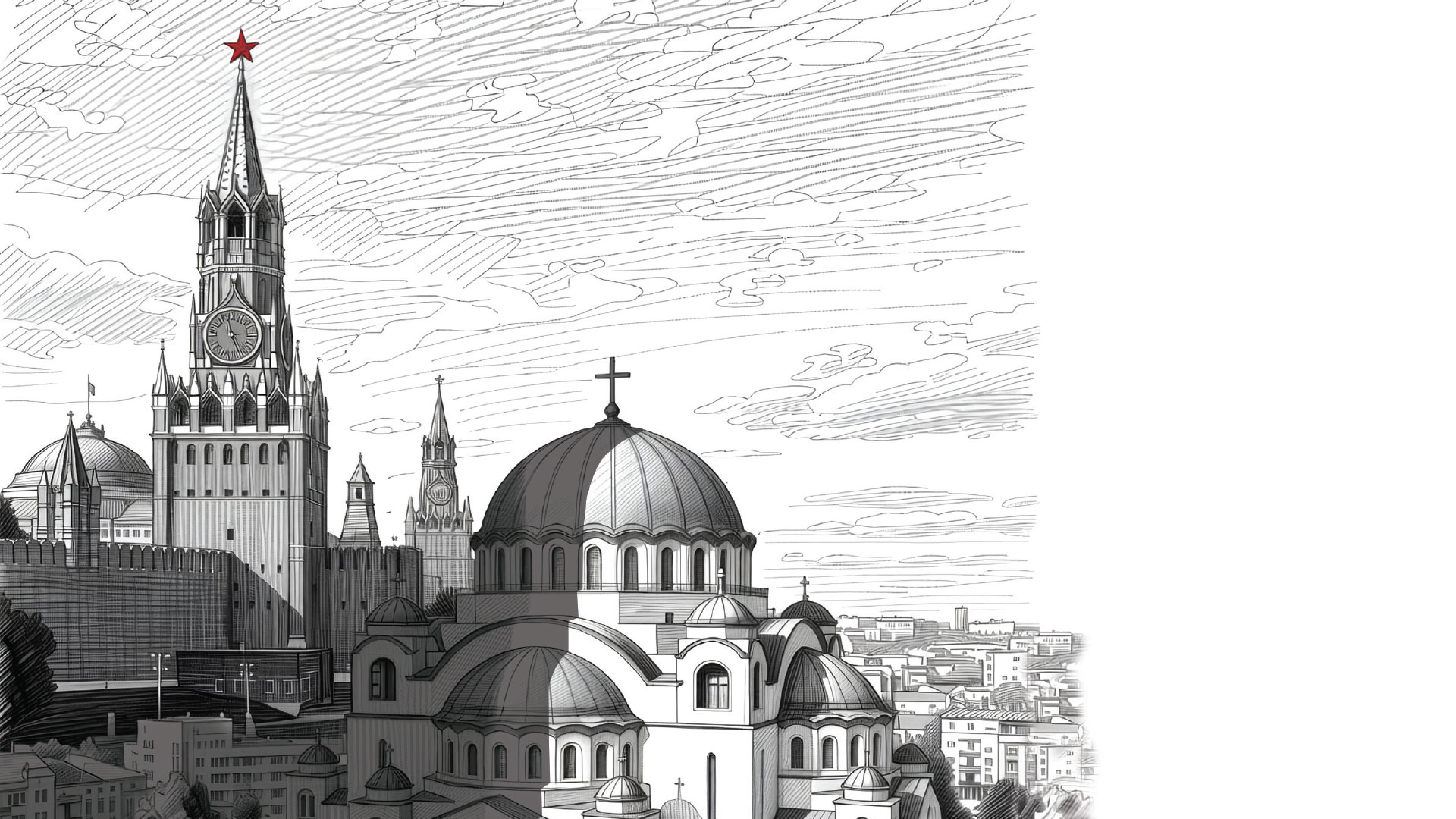
This paper examines how the Serbian Orthodox Church (SOC) is portrayed in existing research and media discourse, primarily as a major conduit of Russian influence in the Western Balkans through narratives tied to the Kremlin’s “Russian World” project and hybrid warfare activities.