PUBLICATION: Working study
Territorial and boundary disputes between Serbia and Kosovo
In this case study BCSP Researcher Zorana Brozovic has explored people’s perspective on territorial and boundary issues in South Serbia, near administrative boundary with Kosovo and Metohija. Data for this research were collected in the town of Bujanovac.
Our findings show that the biggest challenge in this community is underdevelopment.
Participants in this region have stated that, while society is divided along ethnic lines, other problems include non-recognition of degrees awarded in Kosovo; the prolonged presence of armed forces in this region; and lack of freedom of movement for the people living in Kosovo.
With the recommendations in this paper we are addressing Government of Serbia, local authorities and the international community.
This case study is a product of project The People’s Peacemaking Perspectives, a joint initiative implemented by Conciliation Resources and Saferworld and financed under the European Commission’s Instrument for Stability.
Tags: ..., administrative, boundary, boundaryboundary, bujanovac, collected, disputes, issues, kosovo, metohija, perspective, research, serbia, south, territorial
PDF PREVIEW
RELATED

Date: 21.07.2026.
Author: Dr Srđan Cvijić | Igor Bandović | Marko Drajić | Predrag Petrović |
In November 2025, the Belgrade Centre for Security Policy published the policy brief Political and Institutional Crisis in Serbia: Possible Scenarios. The brief outlined four scenarios and their corresponding outcomes.
Date: 28.05.2026.
Author: Belgrade Centre for Security Policy
As the coordinator of the Working Group for Chapter 24 within the National Convention on the European Union (NCEU), BCSP compiled joint comments from nine NCEU member organizations on the Draft Law on Internal Affairs, which was subject to official public debate in April 2026.
Date: 07.04.2026.
Author: Belgrade Centre for Security Policy
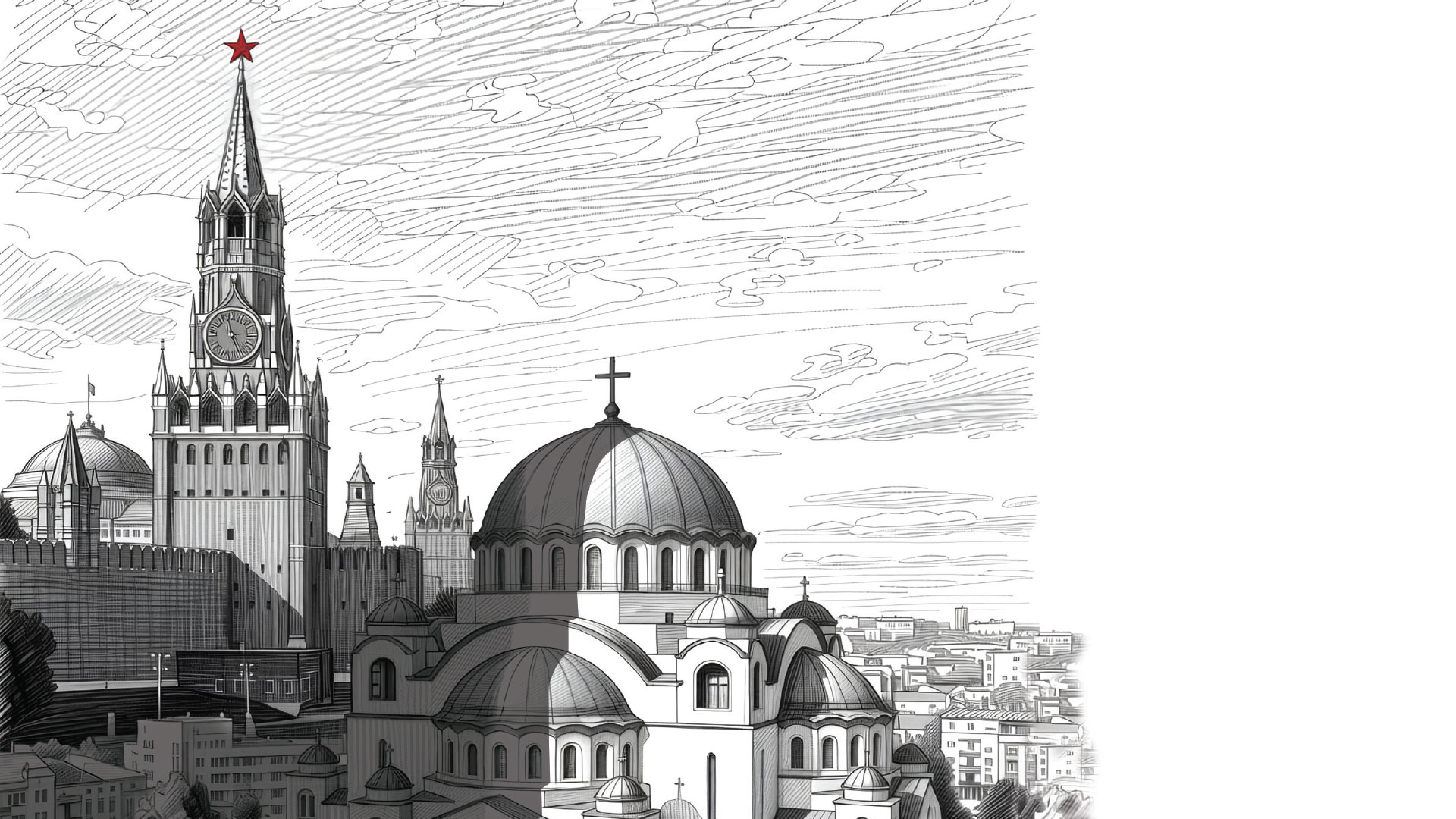
This paper examines how the Serbian Orthodox Church (SOC) is portrayed in existing research and media discourse, primarily as a major conduit of Russian influence in the Western Balkans through narratives tied to the Kremlin’s “Russian World” project and hybrid warfare activities.