PUBLICATION: Project
People’s Peacemaking Perspectives
The recommendations of this research are intended for the European Union (EU) in order to properly support the resolution of disputes in the Western Balkans.
In the project ” People’s Peacemaking Perspectives” BCSP participated together with the prestigious British civil society organizations Saferworld and Conciliation Resources.
The project goal was to analyze territorial and border demarcation disputes in several world regions. The goal of the research was to elaborate territorial and border demarcation disputes in Western Balkans with a focus on local, national, regional and international actors’ responses to these issues and attitudes of the people living in these areas to those approaches.The recommendations of this research are intended for the European Union (EU) in order to properly support the resolution of disputes in the Western Balkans. The study involved organizations from Bosnia and Herzegovina (Center for Security Studies), Montenegro (Center for Security Studies) and Kosovo (Kosovo Centre for Security Studies and Forum for Civic Initiatives).
In particular, the task of the research was to investigate, based on the analysis of territorial and border demarcation disputes:
- Which approaches local, regional and international actors applied during the previous resolution of territorial and border demarcation disputes,
- How the policy of joining the European Union (EU) may contribute to the resolution of territorial and border demarcation disputes.
Results
- BCSP researcher Zorana Brozovic authored case studies on Serbia’s territorial and border disputes with Kosovo and Montenegro, which were presented at a roundtable held in Belgrade.
- The final regional report “Drawing boundaries in the Western Balkans: a People’s perspective” is available on this link.
- Three methodological workshops gathering researchers were held.
- BCSP presented results of “People’s Peacemaking Perspective” project to the European Parliament, DG Enlargement, European External Action Service and to the representatives of think-tank organizations in Brussels.
Tags: ..., balkans, border, disputes, european, intended, order, peacemaking, people’s, perspectives, properly, recommendations, research, resolution, support, territorial, union, western

PDF PREVIEW
RELATED

Date: 21.07.2026.
Author: Dr Srđan Cvijić | Igor Bandović | Marko Drajić | Predrag Petrović |
In November 2025, the Belgrade Centre for Security Policy published the policy brief Political and Institutional Crisis in Serbia: Possible Scenarios. The brief outlined four scenarios and their corresponding outcomes.
Date: 28.05.2026.
Author: Belgrade Centre for Security Policy
As the coordinator of the Working Group for Chapter 24 within the National Convention on the European Union (NCEU), BCSP compiled joint comments from nine NCEU member organizations on the Draft Law on Internal Affairs, which was subject to official public debate in April 2026.
Date: 07.04.2026.
Author: Belgrade Centre for Security Policy
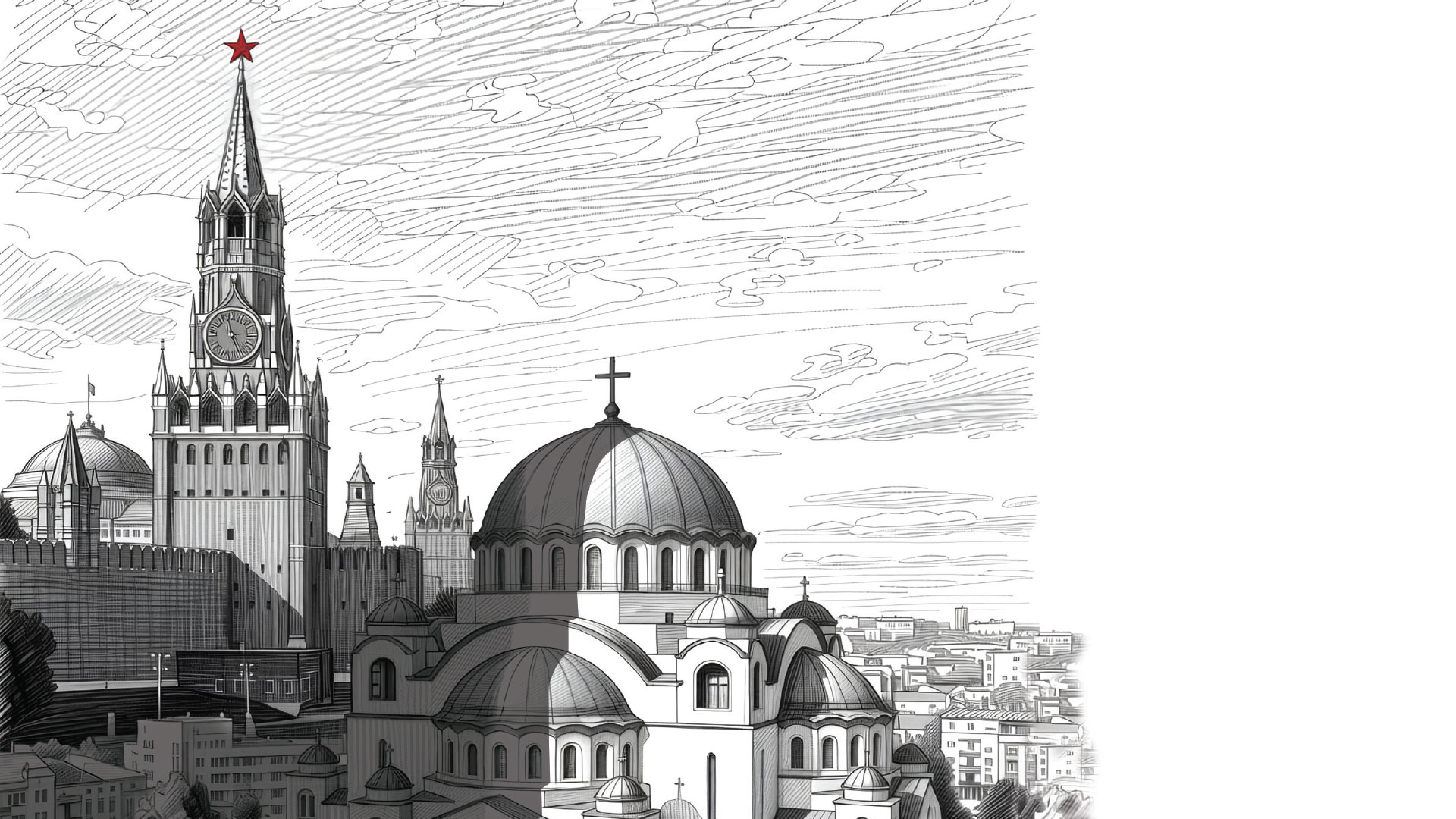
This paper examines how the Serbian Orthodox Church (SOC) is portrayed in existing research and media discourse, primarily as a major conduit of Russian influence in the Western Balkans through narratives tied to the Kremlin’s “Russian World” project and hybrid warfare activities.